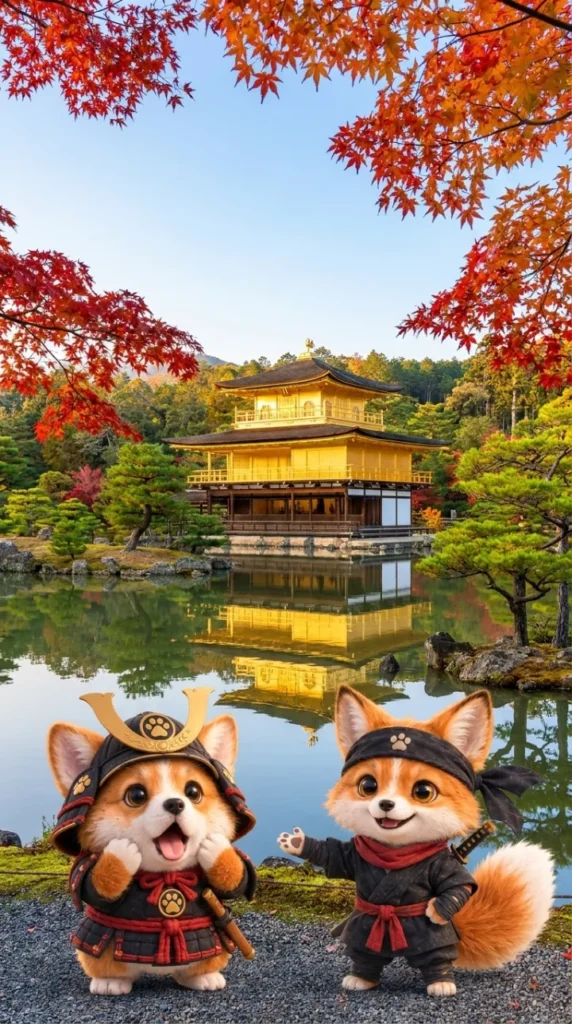
Kojiro had heard a rumor: somewhere in Kyoto, there is a temple made of gold. Hayate just smiled and led the way. One bus ride later, Kojiro’s jaw dropped.
Kinkaku-ji, the Golden Pavilion, is one of the most photographed places in Japan: a three-story temple covered in gold leaf, floating above a mirror-like pond. Here is how to get there, when to go to beat the crowds, and how to turn it into an easy half day in northwest Kyoto.
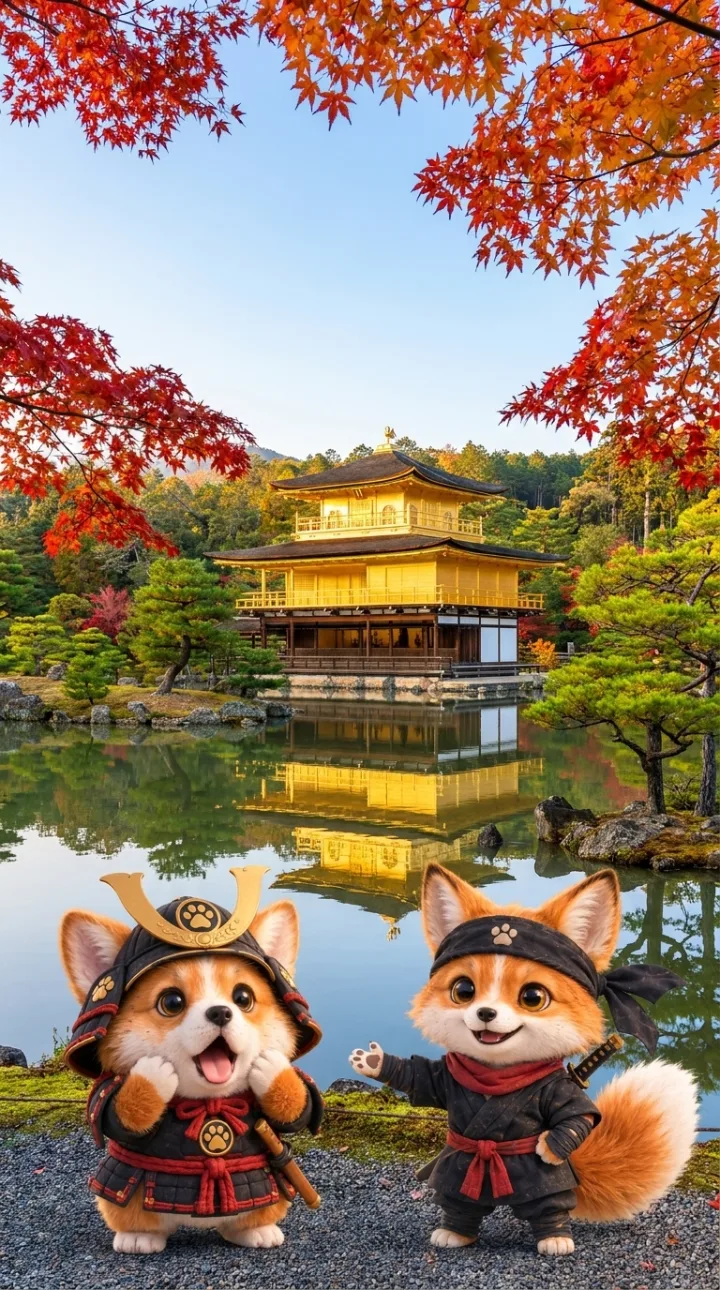
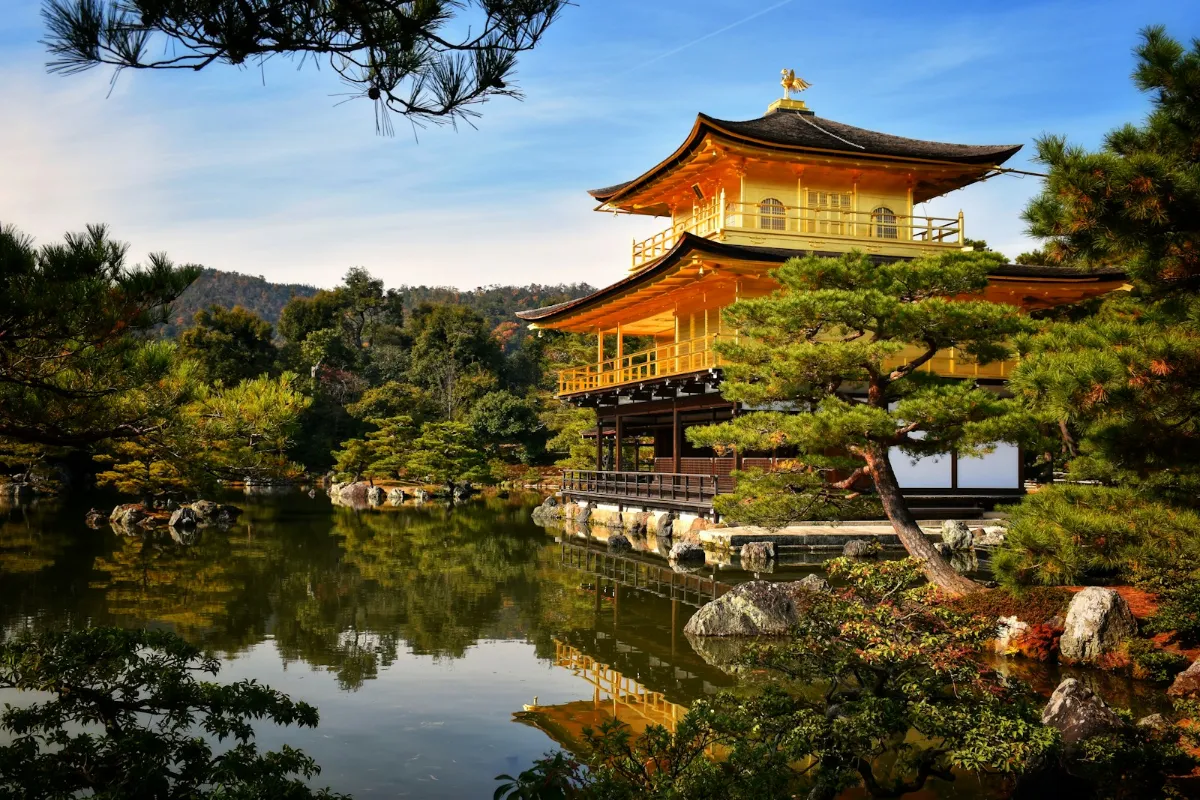
Table of contents
- Kinkaku-ji entrance fee, hours and how long to spend
- How to get to Kinkaku-ji from Kyoto Station (and Osaka)
- Best time to visit Kinkaku-ji (and how to avoid crowds)
- What to see at Kinkaku-ji: can you go inside?
- Kinkaku-ji vs Ginkaku-ji: which should you visit?
- Kinkaku-ji to Ryoan-ji and Arashiyama: a half-day plan
- Kinkaku-ji tours worth booking
- Where to stay near Kinkaku-ji
- Kinkaku-ji FAQ
Quick picks
- Visiting on your own: no tour or advance ticket needed. Buy your ¥500 ticket at the gate and go at 9:00 a.m. to beat the crowds.
- One day for all of Kyoto’s big sights: a guided day tour covering Kinkaku-ji, Arashiyama, Nijo Castle and Fushimi Inari (4.8/5 from 1,592 Klook reviews). Check dates and prices for the Kyoto Panoramic Day Tour on Klook
- Prefer Gion and Kiyomizu-dera: the classic day tour from Osaka or Kyoto (4.7/5 from 975 Klook reviews). Check dates and prices for the Kyoto Classic Day Tour on Klook
Kinkaku-ji entrance fee, hours and how long to spend
| Entrance fee | ¥500 for adults and high school students; ¥300 for elementary and junior high school students (no advance booking needed) |
| Opening hours | 9:00 a.m. to 5:00 p.m., open every day of the year |
| Time needed | About 45 minutes to 1 hour for the garden loop |
| Best time to visit | Right at 9:00 a.m., or the last hour before closing; late November for autumn leaves |
| Access | Medium: about 40 minutes by city bus from Kyoto Station, no train station nearby |
| Luggage | The temple has no lockers or luggage storage, so leave bags at your hotel or a station locker |
Your ticket is a nice surprise: instead of a plain stub, you get a paper ofuda, a temple talisman with calligraphy that many visitors keep as a free souvenir.
Hayate’s ninja secret: the garden is a one-way loop that ends at the exit, so you cannot go back for a second photo of the pond. Take your time at the first viewpoint.
How to get to Kinkaku-ji from Kyoto Station (and Osaka)
Kinkaku-ji sits in the northwest corner of Kyoto, away from the train lines, so most visitors arrive by bus. The stop is Kinkakuji-michi, a few minutes’ walk from the gate (city bus routes 12, 59, 205 and M1 all stop there).
| From | Route | Time | Cost |
|---|---|---|---|
| Kyoto Station (easiest) | City bus 205 to Kinkakuji-michi | About 40 min (longer in autumn traffic) | ¥230 |
| Kyoto Station (faster at busy times) | Karasuma subway line to Kitaoji (about 15 min), then city bus 205 or M1, or a short taxi ride | About 30–35 min | Subway around ¥260 + bus ¥230 |
| Kyoto Station by taxi | Direct | About 25–30 min | Roughly ¥3,000–4,000 |
| Osaka | JR Special Rapid to Kyoto Station (about 30 min), then as above | About 1.5 hours | About ¥800–850 one way |
| Tokyo | Shinkansen to Kyoto (about 2 hours 15 min), then as above | About 3 hours | About ¥14,000–14,500 one way (reserved seat) |
Pay for buses and the subway by tapping an IC card (Suica, PASMO or ICOCA) or a contactless credit card. Heads up: Kyoto plans to charge visitors a higher bus fare than residents, but as of October 2026 the plan has not started yet; the flat fare is still ¥230.
Coming from Tokyo? Compare JR Passes and Shinkansen tickets on Klook. And get mobile data before you land so Google Maps can track your bus: Airalo Japan eSIM.
Open Kinkaku-ji in Google Maps
Best time to visit Kinkaku-ji (and how to avoid crowds)
Kinkaku-ji is crowded almost all day, especially with school groups and tour buses from late morning. Two windows are noticeably calmer:
- 9:00 a.m., right at opening: be at the gate a few minutes early for the softest light on the gold
- The last hour before closing: tour groups thin out and the pavilion glows in the late afternoon sun
- Weekdays beat weekends and Japanese holidays
Kinkaku-ji in autumn, winter and spring
- Autumn (late November to early December): red and orange maples frame the pond. In 2026 the leaves are forecast to turn later than usual in Kyoto, so early December may be at its best. Expect the biggest crowds of the year
- Winter: snow on the golden roof is the dream photo, but it only happens a few days each year. The temple runs an official live camera, so check it on snowy mornings before you go. More snow tips in our Kyoto in winter guide
- Spring and summer: fresh green trees and fewer crowds than autumn; cherry blossoms here are not the main attraction
Dress for walking on gravel paths and a few uneven stone steps. In late autumn, mornings in Kyoto are chilly, so bring a light jacket.
What to see at Kinkaku-ji: can you go inside?
No, you cannot go inside the Golden Pavilion; you admire it from across the pond. The second and third floors are covered in pure gold leaf, and a golden phoenix sits on the roof. Each floor is built in a different architectural style, which is why it looks so unusual.
Along the garden loop, look for:
- The classic view across Kyoko-chi pond, right after the entrance: the reflection shot everyone comes for
- The side view near the Hojo (main hall) and the Rikushu-no-Matsu, a pine tree trained into the shape of a boat
- Ryumon Falls, a small waterfall with a “carp stone” said to be leaping up to become a dragon
- Small stone statues where visitors try to toss coins into a bowl for good luck
- Sekkatei, an old tea house up the hill, named for how beautiful the pavilion looks at sunset (you view it from outside)
- Fudo-do Hall near the exit, plus stalls selling omamori charms and a spot for a matcha break

After the pavilion, the path climbs a short hill with stone steps. Kojiro took them one at a time. Hayate waited at the top. (The path is wheelchair accessible as far as the pavilion; after that there are steps, so wheelchair and stroller users return the way they came.)

Kojiro approves! Near the exit, sit down for a bowl of matcha and a seasonal Japanese sweet. It was the only time all day that Hayate lost his cool.
Kinkaku-ji vs Ginkaku-ji: which should you visit?
They sound like twins, but they feel very different. Kinkaku-ji (the Golden Pavilion) is dazzling and quick to see. Ginkaku-ji (the Silver Pavilion) on the other side of the city was never covered in silver; it is a quieter Zen temple with a beautiful moss garden and a sand garden, and it starts the Philosopher’s Path walk.
| Kinkaku-ji | Ginkaku-ji | |
|---|---|---|
| Wow factor | Huge: real gold leaf | Subtle and calm |
| Time needed | 45–60 min | About 1 hour |
| Pairs well with | Ryoan-ji, Ninna-ji, Arashiyama | Philosopher’s Path, Nanzen-ji |
| Location | Northwest Kyoto | Northeast Kyoto |
Short on time? Choose Kinkaku-ji for the iconic photo. Have a full day? You can do both: city buses 102 and 204 link the two in about 40 minutes.
Kinkaku-ji to Ryoan-ji and Arashiyama: a half-day plan
Kinkaku-ji sits at the start of the Kinukake-no-michi, a road that links three World Heritage temples. Here is an easy half day:
- 9:00 Kinkaku-ji at opening
- 10:15 Walk about 20 minutes (or take bus 59) to Ryoan-ji and its famous rock garden of 15 stones
- 11:30 Walk about 10 minutes to Ninna-ji, a huge temple with a five-story pagoda
- 12:30 From Omuro-Ninnaji Station, ride the little Randen tram (one change) to Arashiyama for lunch and the bamboo grove in the afternoon
Hayate’s ninja secret: doing it in this order means you walk downhill and end where the food is. Kojiro approves.
Kinkaku-ji tours worth booking
You don’t need a tour for Kinkaku-ji itself: tickets are sold at the gate and there is no online booking for regular entry. A day tour only makes sense if you want to see several far-apart sights in one day without fighting the buses, especially if you are coming from Osaka.
Kyoto Panoramic Day Tour: Kinkaku-ji, Arashiyama, Nijo Castle and Fushimi Inari
| Best for | First-timers with one day in Kyoto who want the big sights without planning buses |
| Not for | Travelers who like to linger: each stop is timed |
| Route | Kinkaku-ji, Arashiyama, Nijo Castle and Fushimi Inari |
| Departs from | Osaka or Kyoto |
| Guide | Guides speak English and Chinese (some also Japanese), according to reviews |
| Price | From about US$53 per person on Klook when we checked; changes by date |
| Rating | 4.8 out of 5 from 1,592 reviews on Klook (checked October 2026) |
| Cancellation | Check the terms on the booking page before you book |
| Our verdict | A good-value way to see Kyoto’s headline sights in one day |
What travelers say: reviewers on Klook most often praise friendly, knowledgeable guides who share history and lunch recommendations, a punctual, well-organized day, and guides who message the group the day before so the meeting point is easy to find.
Check dates and prices for the Kyoto Panoramic Day Tour on Klook
Kyoto Classic Day Tour: Kinkaku-ji, Kiyomizu-dera, Gion and Fushimi Inari
| Best for | Travelers who want Kinkaku-ji plus the old streets of Higashiyama and Gion in one day |
| Not for | Anyone who wants long, slow visits: about 1 hour at some stops |
| Route | Kinkaku-ji, Kiyomizu-dera, Ninenzaka, Gion and Hanamikoji, Yasaka Shrine and Fushimi Inari |
| Departs from | Osaka or Kyoto |
| Guide | Chinese, English and Japanese; no shopping stops |
| Rating | 4.7 out of 5 from 975 reviews on Klook (checked October 2026) |
| Cancellation | Check the terms on the booking page before you book |
| Our verdict | A good alternative if you prefer Gion and Kiyomizu-dera over Arashiyama |
What travelers say: reviewers on Klook most often mention a convenient, stress-free day and patient guides who explain each place in several languages. The most common downsides are crowds at the big sights and short stops: some wish they had more than an hour at Fushimi Inari.
Check dates and prices for the Kyoto Classic Day Tour on Klook
Visiting in November? There is also a seasonal autumn leaves day tour to Kinkaku-ji and Arashiyama with an evening maple train ride (check dates and prices on Klook) (4.6 out of 5 from 13 reviews).
Where to stay near Kinkaku-ji
There are almost no hotels right next to Kinkaku-ji, and you do not need one. Stay near Kyoto Station (for the subway to Kitaoji and day trips) or downtown around Shijo and Karasuma (for buses and restaurants). Our full guide: Where to Stay in Kyoto: Kojiro & Hayate’s Hotel Picks by Area and Budget.
Browse Kyoto hotels on Klook →
Kinkaku-ji FAQ
Is Kinkaku-ji worth it?
Yes, for most first-time visitors. It is quick, cheap and genuinely stunning. If you dislike crowds, go at 9:00 a.m. and pair it with the quieter Ryoan-ji and Ninna-ji.
Why is Kinkaku-ji famous?
It was built in the late 1300s as the retirement villa of the shogun Ashikaga Yoshimitsu and became a Zen temple (officially Rokuon-ji) after his death. Its gold-covered pavilion and mirror pond garden make it one of the symbols of Kyoto, and it is part of a UNESCO World Heritage Site.
Did Kinkaku-ji burn down?
Yes. The original pavilion was destroyed by arson in 1950, and the building you see today was rebuilt in 1955. Its gold leaf and lacquer were fully restored again in 1987.
Can you visit Kinkaku-ji at night?
No. The temple closes at 5:00 p.m. and there are no regular evening openings. For night views in Kyoto, try Gion or one of the autumn illuminations at other temples.
Do I need to book Kinkaku-ji tickets in advance?
No. Buy your ticket at the gate; there is no online booking for regular entry.
Where to go next: our Ginkakuji and the Philosopher’s Path guide for the Silver Pavilion and the canal walk, our Nijo Castle guide for the shogun’s palace, Kiyomizu-dera Guide for the temple on stilts and the old streets of Higashiyama, Arashiyama Guide for the bamboo grove and Sagano train (about 30 minutes away by Randen tram), Fushimi Inari Shrine Guide for the 10,000 torii gates, and our Japan Travel Kit for eSIM, transport and booking tips.

Last checked on official sites: October 2026. Prices and hours can change.
This post contains affiliate links. If you book through them, we may earn a small commission at no extra cost to you.
Kojiro and Hayate are AI-generated characters; all character images are AI-generated illustrations.
Sources: Kinkaku-ji official site: access and hours · Kinkaku-ji official guide · Kinkaku-ji FAQ · Nippon.com: autumn foliage forecast 2026