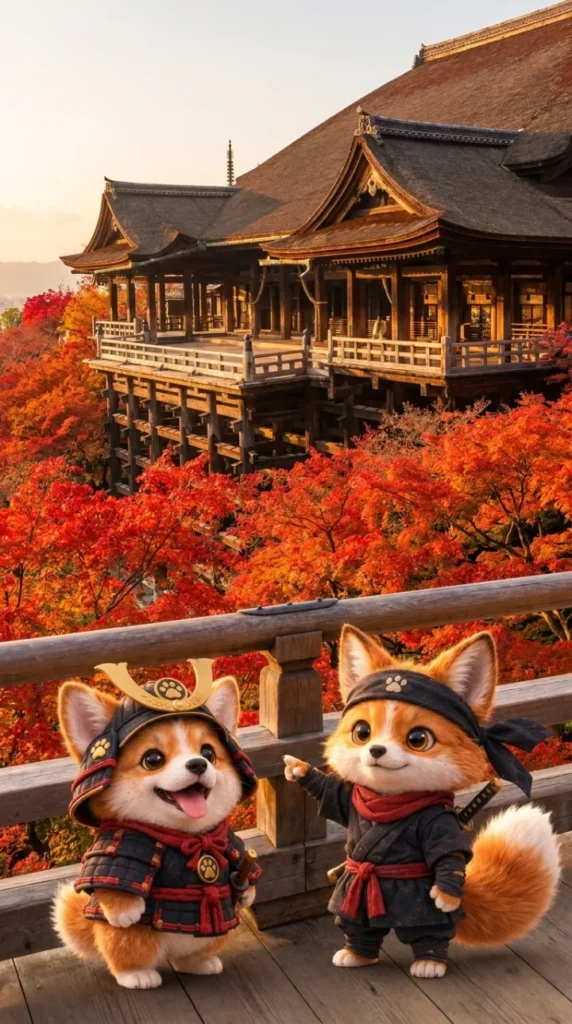
“A temple built on a cliff… on stilts?!” Kojiro could not believe it until he saw it: a giant wooden stage hanging over a sea of red maples. Hayate had only one condition for the trip: “We go at 6 a.m.” Kojiro grumbled. Then he saw the empty stage at sunrise and stopped grumbling.
Kiyomizu-dera is Kyoto’s most visited temple, and the old stone streets below it, Sannenzaka and Ninenzaka, are the Kyoto you picture before you arrive. This guide covers tickets, hours, the bus from Kyoto Station, the 2026 autumn night illumination and an easy walk down to Gion.
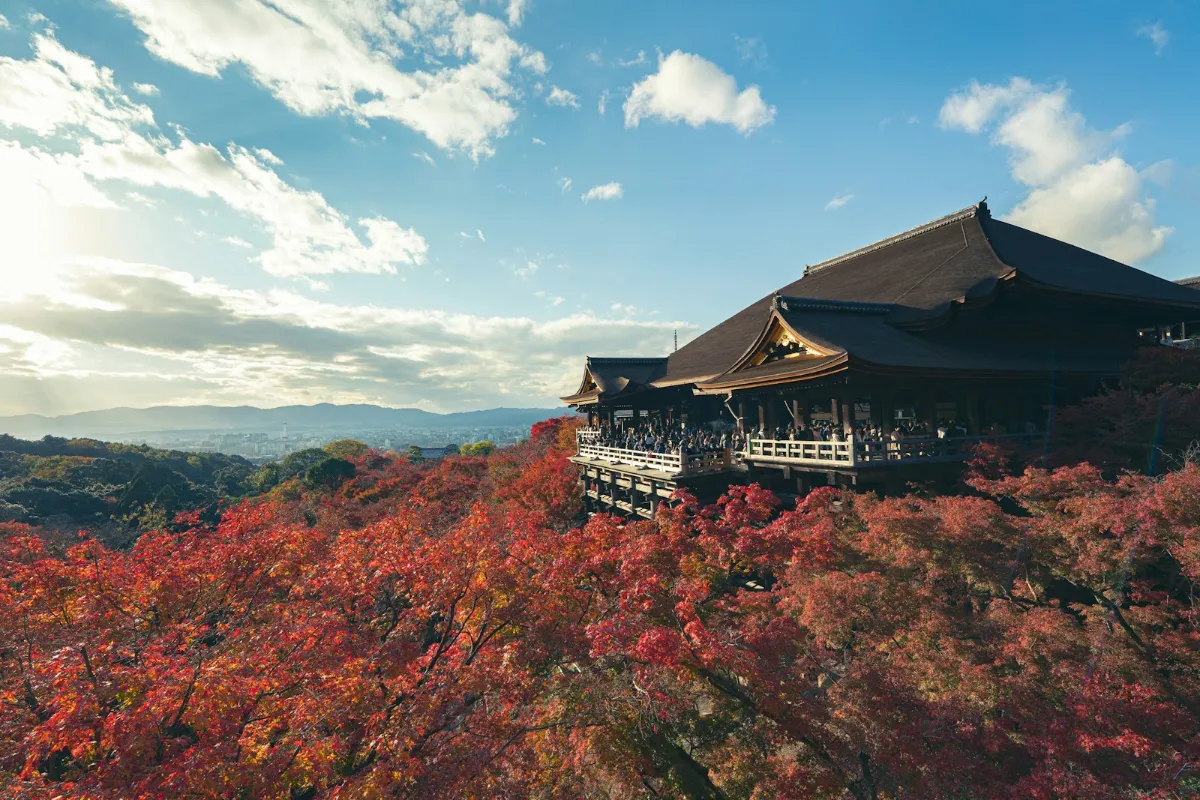
Table of contents
- Kiyomizu-dera entrance fee, hours and how long to spend
- How to get to Kiyomizu-dera from Kyoto Station
- Best time to visit Kiyomizu-dera (and how to avoid the crowds)
- Kiyomizu-dera night illumination 2026
- What to see at Kiyomizu-dera: the stage, Otowa Waterfall and more
- Sannenzaka and Ninenzaka: the old streets below the temple
- Kiyomizu-dera to Gion: an easy walking route
- Kimono rental and tours near Kiyomizu-dera
- Where to stay near Kiyomizu-dera
- Kiyomizu-dera FAQ
Quick picks
- Visiting on your own: no tour or advance ticket needed. Tickets are sold at the gate; come at opening to beat the crowds.
- Walk the old streets in kimono: a rental shop about 5 minutes on foot from the temple (4.8/5 from 652 Klook reviews). Check dates and prices for Kyoto Kimono Rei (Kiyomizu store) on Klook
- One day for several big sights: a guided day tour from Osaka or Kyoto with Kiyomizu-dera, Gion, Kinkaku-ji and Fushimi Inari (4.7/5 from 975 Klook reviews). Check dates and prices for the Kyoto Classic Day Tour on Klook
Kiyomizu-dera entrance fee, hours and how long to spend
| Entrance fee | ¥500 for adults; ¥200 for elementary and junior high school students. No advance booking needed |
| Opening hours | Opens at 6:00 a.m. every day. Closes at 6:00 p.m. most of the year (6:30 p.m. in July and August), and later during special night viewings |
| Time needed | 1 to 1.5 hours for the temple; 2 to 3 hours with Sannenzaka, Ninenzaka and the walk to Gion |
| Best time to visit | 6:00 to 8:00 a.m., or the last hour before closing; late November for autumn leaves |
| Access | Easy: city bus from Kyoto Station, then a 10-minute uphill walk |
| Accessibility | The temple has step-free routes to the Main Hall for wheelchairs and strollers |
Hayate’s ninja secret: Kiyomizu-dera opens at 6 a.m., hours before most Kyoto sights. Come early and you get the famous stage almost to yourself.
How to get to Kiyomizu-dera from Kyoto Station
The temple sits on a hillside in Higashiyama, east Kyoto. There is no train station right next to it, so most visitors take a bus or taxi and then walk up the slope.
| From | Route | Time | Cost |
|---|---|---|---|
| Kyoto Station | City bus 206 or 100 to Gojozaka, then walk 10 minutes uphill | About 30 minutes in total (longer in busy seasons) | ¥230 |
| Kyoto Station by taxi | To the bottom of Kiyomizu-zaka or Chawan-zaka | About 15 minutes | Roughly ¥1,500–2,000 |
| Gion-Shijo or Kawaramachi | City bus 207 to Kiyomizu-michi, then walk 10 minutes; or walk the whole way | About 20–25 minutes | ¥230 or free |
| Fushimi Inari | Keihan line from Fushimi-Inari to Kiyomizu-Gojo, then walk about 25 minutes | About 35 minutes | Train fare only |
| Osaka | Keihan line to Kiyomizu-Gojo, then walk about 25 minutes (or JR to Kyoto Station, then the bus) | About 1 to 1.5 hours | Train fare + bus |
Map warning from the temple itself: there are only two ways into the grounds, through the Nio-mon gate at the top of Kiyomizu-zaka or from the top of Chawan-zaka. Some map apps suggest routes that do not actually reach the temple, so follow the slopes, not the shortcuts.
Get mobile data before you land so you can check bus times: Airalo Japan eSIM. Pay for buses with an IC card (Suica, PASMO or ICOCA) or a contactless card.
Open Kiyomizu-dera in Google Maps
Best time to visit Kiyomizu-dera (and how to avoid the crowds)
- 6:00 to 8:00 a.m.: the calmest time of day by far, with soft light on the stage. The shops on the slopes are still closed, which is part of the magic
- Late afternoon: tour groups thin out after about 4 p.m., and the sunset view from the west gate is famous
- Avoid 10 a.m. to 3 p.m. on weekends in spring and autumn, when the slopes can be shoulder to shoulder
Kiyomizu-dera in autumn, spring and winter
- Autumn (late November to early December): around 1,000 maple trees turn red around the stage. In 2026 the leaves are forecast to turn a little later than usual in Kyoto
- Spring (late March to early April): cherry blossoms around the stage, plus a spring night viewing
- Winter: quiet and crisp, and the rare snowy morning is spectacular
Kiyomizu-dera night illumination 2026
The Evening Special Visit (yoru no tokubetsu haikan) is the only time you can be inside Kiyomizu-dera after dark. It happens three times a year: in spring for the cherry blossoms, for a few days in mid-August, and in autumn. The autumn one is the most popular, because it lines up with the peak of the maple leaves. For every other temple light-up this autumn, with dates and prices, see our Kyoto autumn leaves 2026 guide.
- 2026 dates: November 21 to November 30
- Hours: the temple stays open until 9:30 p.m. (last entry 9:00 p.m.)
- Price: the same as daytime, ¥500 for adults and ¥200 for children
- Booking: not needed; pay at the gate
What you can see at night
- The glowing stage: the huge wooden Main Hall and its stage are lit up, floating above the dark hillside
- Red maples lit from below: around 1,000 maple trees around the stage glow bright red and orange against the night sky
- The view from Okunoin: the postcard angle back toward the stage is even more dramatic at night, with the lights of Kyoto spread out behind it
- A blue beam of light: a single blue light is shone into the sky from the temple. It represents the compassion of Kannon, the goddess of mercy enshrined here
- The Higashiyama lanes after dark: walking down Sannenzaka and Ninenzaka by lantern light is half the experience
Why it is so popular
It runs for only about ten days, it happens when the leaves are at their best, and the contrast of glowing red leaves, an old wooden temple and the city lights is something you cannot see in daytime. That combination makes it one of the most photographed events in Kyoto every autumn.
Tips for the night viewing
- The busiest time is right after sunset, from about 5:30 to 7:30 p.m. Arriving after 8:00 p.m. is usually calmer
- The slopes up to the temple get very crowded; allow extra time and follow the staff directions
- Kyoto nights in late November are cold, around 5 to 10°C, so bring a warm layer
- Small extra illuminations, such as a special opening of the Jojuin garden, are held in some years with a separate ticket; check the official site before you go
Hayate’s ninja secret: visit at 6 a.m. for the empty stage, then come back after dark for the light-up. Two different temples for the same price.
What to see at Kiyomizu-dera: the stage, Otowa Waterfall and more
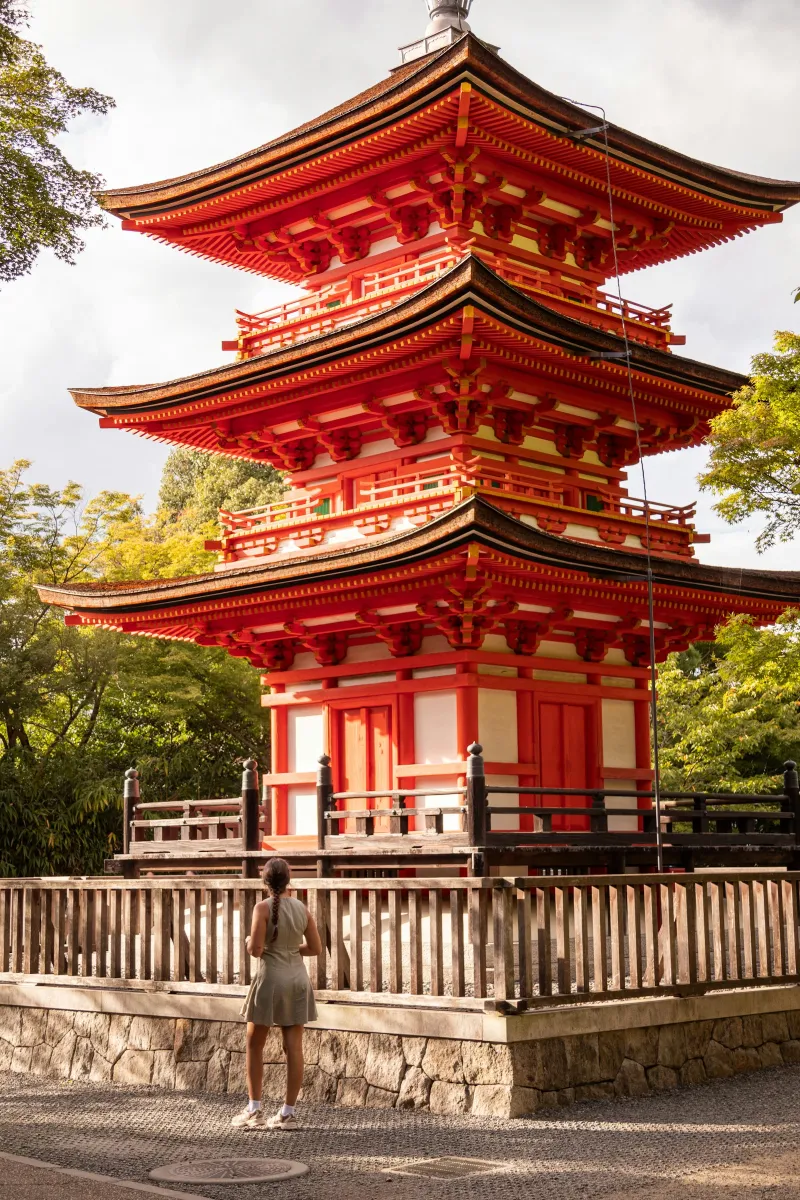
- Nio-mon gate: the bright vermilion main gate at the top of the slope
- The Main Hall stage: a huge wooden balcony built out over the cliff, held up by a lattice of tall wooden pillars using traditional joinery. The Main Hall was rebuilt in 1633 and is a National Treasure
- The view from Okunoin: walk past the Main Hall to look back at the stage. This is the postcard photo
- Otowa Waterfall: the spring the temple is named after. Three streams fall into a pool, and visitors catch the water with long ladles. Pick one stream only: taking from all three is said to be greedy
- Tainai-meguri at Zuigu-do Hall: walk through a pitch-black passage under the hall, guided only by a handrail, for a small extra fee

Kojiro wanted to drink from all three streams. Hayate held up one finger. Kojiro chose the middle one, then asked if he could come back tomorrow for the others.
Sannenzaka and Ninenzaka: the old streets below the temple
Below the temple, a maze of stone-paved slopes and steps is lined with wooden townhouses selling sweets, pottery and souvenirs. Sannenzaka (the “three-year slope”) and Ninenzaka (the “two-year slope”) are the most famous.
- The legend: trip on Sannenzaka and you will have bad luck for three years. That is why shops sell little gourd charms to protect you. Walk carefully, especially in the rain
- Starbucks Ninenzaka Yasaka Chaya: a coffee shop inside a traditional townhouse with tatami rooms upstairs
- Yasaka Pagoda: the five-story pagoda rising above the lanes is the classic photo spot
- Shops open around 9 or 10 a.m. Before that, the streets are empty and perfect for photos

Kojiro approves! Try nama yatsuhashi, soft cinnamon mochi folded around sweet bean paste, and a matcha soft-serve on the slopes. Many shops ask you to eat at the shop rather than while walking, so look for a bench.
Kiyomizu-dera to Gion: an easy walking route
From Kiyomizu-dera, Gion is about a 25 to 30-minute walk, mostly downhill, through some of the prettiest streets in Kyoto:
- Kiyomizu-dera, then down Kiyomizu-zaka
- Turn onto Sannenzaka, then Ninenzaka
- Detour for the view of Yasaka Pagoda
- Follow the quiet Nene-no-michi path north
- Walk through Maruyama Park to Yasaka Shrine, the gateway to Gion
Want the evening version? Read our Kyoto hotel guide for hotels in Gion, so you can walk these lanes after dark.
Kimono rental and tours near Kiyomizu-dera
Higashiyama is the most popular area in Kyoto for walking in kimono, and many rental shops are within a few minutes of the temple. A basic rental usually includes the kimono, obi belt, bag and sandals, and staff dress you in about 30 minutes. Book ahead in autumn and spring.
What travelers say about kimono rental
We read through Klook reviews for popular rental shops near Kiyomizu-dera. Here is what came up again and again:
- Big selection and helpful staff: reviewers like that staff help them choose colors, belts and accessories, and that English-speaking staff are available at the larger shops
- Quick, professional dressing and hair: many say the hairstyling held up all day, and the photography add-on with a photographer who guides your poses is a favorite
- Go early: the most common tip is to book the first slot of the day, because the slopes get crowded by about 10 a.m., which makes walking and photos harder
- Check what is included: some reviewers were surprised that hair styling, upgraded belts or accessories cost extra. Read the plan details before you book
- Practical notes: taller travelers mention limited sizes, there may be no private changing room (wear a tank top and shorts underneath), and a kimono is warm in summer, when a lighter yukata is more comfortable
- Watch the return time: most shops want the kimono back by about 5:00 to 5:30 p.m., and late returns can cost extra
Kojiro approves! Kojiro tried to rent a kimono. Nothing fit over the helmet. Hayate is still laughing.
Kyoto Kimono Rei (Kiyomizu store)
| Best for | Travelers who want to start right next to the temple |
| Not for | Anyone who wants a huge choice on the cheapest plan (one reviewer counted fewer than 30 basic designs) |
| Location | About 5 minutes on foot from Kiyomizu-dera |
| Included | Kimono, handbag, undergarment and shoes; staff help you dress |
| Return | By 5:30 p.m. the same day |
| Staff languages | Chinese, English and Japanese |
| Price | From about US$21 on Klook when we checked; plans and add-ons vary |
| Rating | 4.8 out of 5 from 652 reviews on Klook (checked October 2026) |
| Cancellation | Check the terms on the booking page before you book |
| Our verdict | The most convenient pick for a Kiyomizu-dera and Ninenzaka walk |
Check dates and prices for Kyoto Kimono Rei (Kiyomizu store) on Klook
Okimono-ya (Kiyomizu store)
| Best for | Friends and couples who want lots of choice, hair styling and photo add-ons |
| Not for | Men looking for a wide selection (reviewers say the choice for men is smaller) |
| Location | Near Kiyomizu-dera; one reviewer walked about 10 minutes to the temple after dressing |
| Staff languages | English, Mandarin, Japanese, Korean and Cantonese |
| Price | From about US$19 on Klook when we checked; plans and add-ons vary |
| Rating | 4.7 out of 5 from 3,853 reviews on Klook (checked October 2026) |
| Cancellation | Check the terms on the booking page before you book |
| Our verdict | A popular all-rounder with a big selection |
Check dates and prices for Okimono-ya kimono rental on Klook
Ookini Kimono (Kiyomizu-dera main store)
| Best for | Travelers who want hair, makeup or a photographer included, and families renting together |
| Not for | Anyone who wants a quiet, unhurried shop: reviewers say it gets very busy, especially in the morning |
| Location | Near Kiyomizu-dera; reviewers mention it is a short walk from the bus stop |
| Staff languages | Reviewers mention English, Chinese and Japanese |
| Price | From about US$21 on Klook when we checked; hair, makeup and photo add-ons cost extra |
| Rating | 4.7 out of 5 from 1,718 reviews on Klook, with 40K+ bookings (checked October 2026) |
| Cancellation | Check the terms on the booking page before you book |
| Our verdict | The most-booked kimono rental near Kiyomizu-dera on Klook; worth it if you want the photo add-on |
What travelers say: reviewers praise the huge choice of kimono and accessories, patient staff who help pick colors, and the photographer add-on. The common warnings: the shop is crowded at opening time, and makeup can take up to an hour, so plan your time.
Check dates and prices for Ookini Kimono (Kiyomizu-dera) on Klook
Want a guide instead? The Kyoto Classic Day Tour (check dates and prices on Klook) covers Kiyomizu-dera, Ninenzaka, Gion, Kinkaku-ji and Fushimi Inari in one day.
Ratings and review themes as shown on Klook in October 2026.
Where to stay near Kiyomizu-dera
Staying in Gion or Higashiyama means you can walk to Kiyomizu-dera for the 6 a.m. opening, before the buses arrive. Kyoto Station and downtown are also easy, about 15 to 30 minutes away by bus or taxi.
- Kyoto Granbell Hotel: in Gion, with a shared bath; about 25 minutes on foot to the temple (4.7/5 from 1,004 Klook reviews). Check dates and prices for Kyoto Granbell Hotel on Klook
- Hyatt Regency Kyoto: a quieter luxury option in southern Higashiyama (4.6/5 from 1,000 Klook reviews). Check dates and prices for Hyatt Regency Kyoto on Klook
- More options by area and budget: Where to Stay in Kyoto: Kojiro & Hayate’s Hotel Picks
Browse Kyoto hotels on Klook →
Kiyomizu-dera FAQ
Is Kiyomizu-dera worth it?
Yes. The stage, the views over Kyoto and the old streets below make it one of the best half days in the city. To enjoy it, go early.
Do I need to buy Kiyomizu-dera tickets in advance?
No. Pay at the gate, including during the night viewings.
Kiyomizu-dera or Fushimi Inari: which is better?
Do both if you can; they are very different. Fushimi Inari is a mountain trail of torii gates (free, open 24 hours), while Kiyomizu-dera is a hillside temple with city views and historic streets. Read our Fushimi Inari guide, Kinkaku-ji guide and Arashiyama guide to plan the rest of your Kyoto days.
What does the Otowa Waterfall water mean?
The temple describes it as pure water for purifying yourself and for making your wishes come true. Popular belief says each of the three streams brings something different, such as long life, love or success. Choose one, and do not be greedy.
Can you visit Kiyomizu-dera at night?
Only during the special night viewings in spring, summer and autumn. On other days the temple closes at 6:00 p.m. (6:30 p.m. in July and August).
Trip prep checklist
- Japan eSIM (Airalo) and an IC card for buses
- Comfortable shoes with grip for stone steps and slopes
- Some cash for small shops and snacks on the slopes
- Coming from Tokyo? Compare JR Passes and Shinkansen tickets on Klook
- Everything we recommend in one place: Japan Travel Kit

Last checked on official sites: October 2026. Prices and hours can change.
This post contains affiliate links. If you book through them, we may earn a small commission at no extra cost to you.
Kojiro and Hayate are AI-generated characters; all character images are AI-generated illustrations.
Sources: Kiyomizu-dera official site: hours and access · Kiyomizu-dera: the grounds · Kiyomizu-dera FAQ · Kyoto City Official Travel Guide (admission) · Time Out: Kiyomizu-dera night light-up · Nippon.com: autumn foliage forecast 2026