This post contains affiliate links. If you book through them, I may earn a small commission at no extra cost to you.
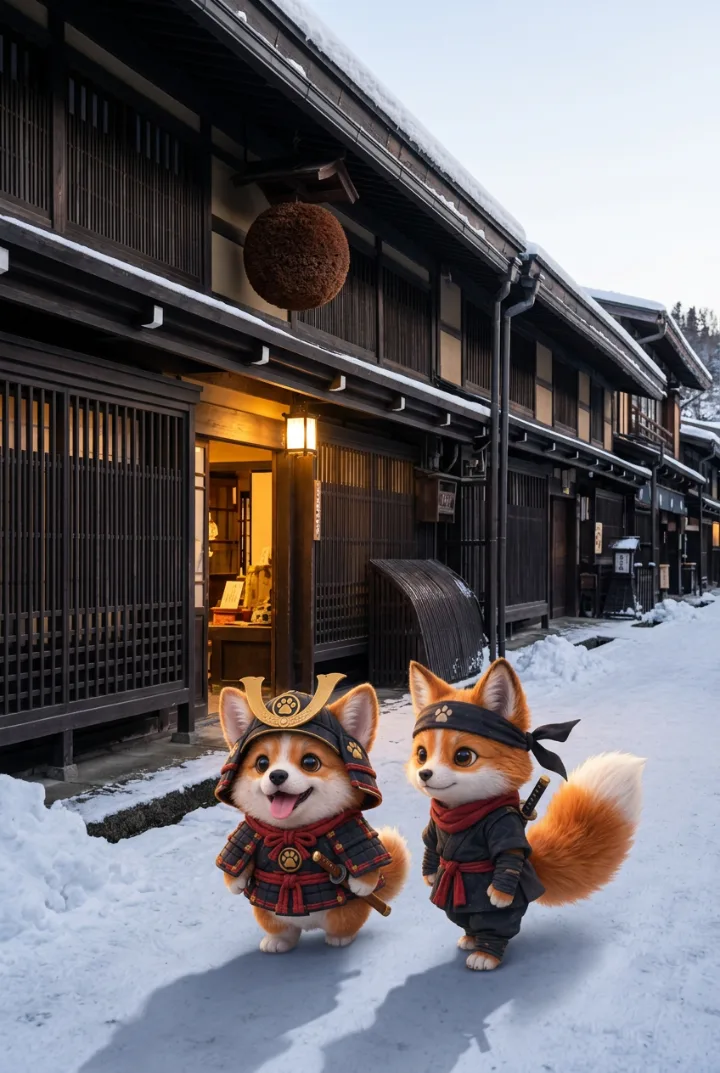
Kojiro the corgi samurai wanted one thing from Takayama: to eat his way down the old streets. Hayate the fox ninja wanted to see the morning markets, the Edo-period town and the snowy gassho villages of Shirakawago. So they made a plan that fits both.
“How many days do I need in Takayama?” is the question I hear most. I was born and raised in Takayama and lived there for 18 years, so this is the plan I give friends: a step-by-step Takayama itinerary for 1, 2 or 3 days, with Shirakawa-go (Shirakawago), Okuhida and winter tips, real opening hours and prices, and the places I actually eat.

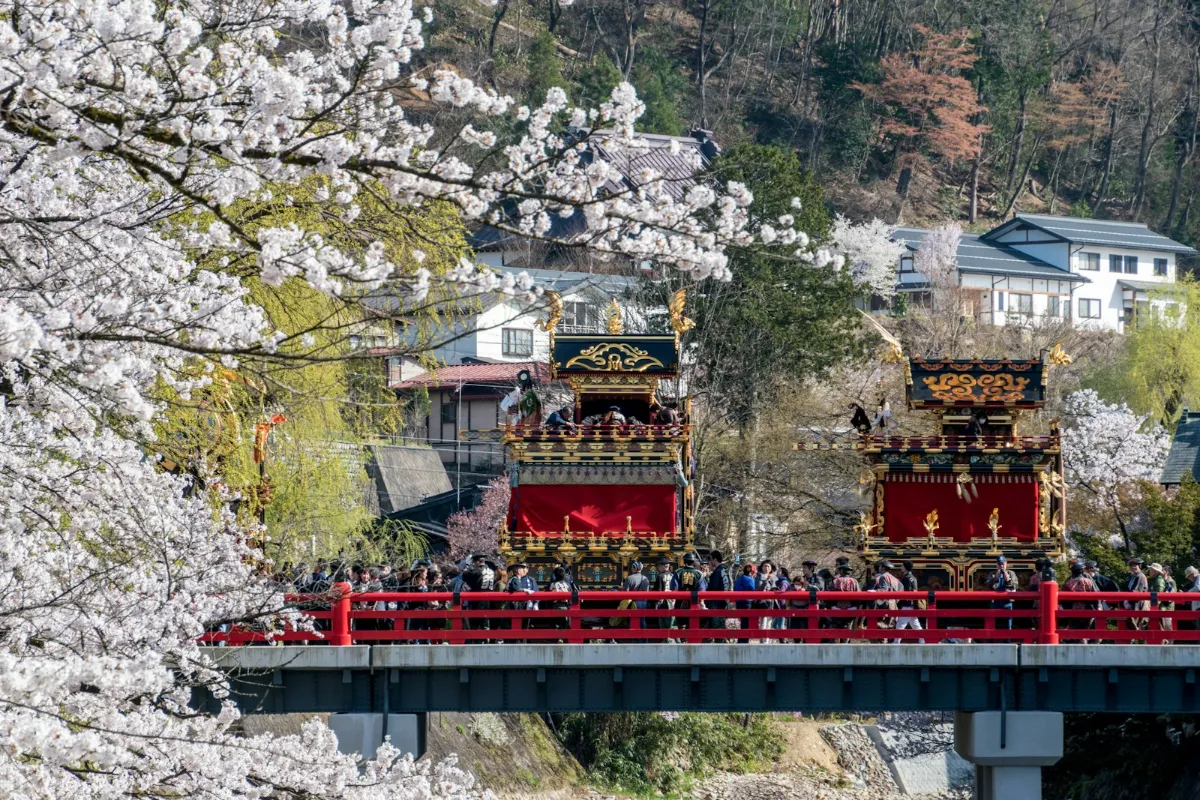
Table of contents
- How many days in Takayama? 1, 2 or 3 days at a glance
- Takayama 1 day itinerary: markets, old town and Hida beef
- Takayama 2 day itinerary with Shirakawago
- Takayama 3 day itinerary: Okuhida, Hida-Furukawa or Kanazawa
- Takayama itinerary in winter: what to wear and what changes
- How to get to Takayama from Tokyo, Kyoto, Osaka and Nagoya
- Where to stay for your Takayama itinerary
- Takayama tours: what to book and what to skip
- Before you go: eSIM, cash and luggage
- Takayama itinerary FAQ
- More Takayama and Shirakawa-go guides
Quick picks
- Only one day? Morning market, Takayama Jinya, the Sanmachi old town and a charcoal-grill dinner. Everything is walkable from the station, so you don’t need a tour.
- Two days (best for most first-timers): Day 1 in Takayama, Day 2 at Shirakawa-go by Nohi Bus (about 50 minutes, ¥2,800 one way). Book the bus as soon as your dates are fixed.
- Starting from Nagoya with no time for a night? A guided day tour covers both towns. Check dates and prices for the Takayama and Shirakawa-go day tour from Nagoya on Klook (4.6/5 from 2,712 Klook reviews).
- Stay near the station: easiest for buses and trains. Check dates and prices for Residence Hotel Takayama Station on Klook (4.9/5 from 1K+ Klook reviews).
How many days in Takayama? 1, 2 or 3 days at a glance
Takayama is a small mountain town, and the old town, the morning markets and most sights are within a 10–15 minute walk of JR Takayama Station. One full day covers the highlights. Two days lets you add Shirakawa-go without rushing. Three days gives you time for the Japanese Alps or a quiet day trip.
| Trip length | Best for | What you can see |
|---|---|---|
| 1 day | Short on time, passing through | Morning market, Takayama Jinya, Sanmachi old town, Hida beef, Higashiyama temple walk |
| 2 days (my pick) | First-timers | Day 1 in Takayama, Day 2 at Shirakawa-go by bus (or Hida Folk Village if you have been to Shirakawa-go) |
| 3 days | Slow travelers, winter and onsen lovers | Add Okuhida and the Shinhotaka Ropeway, Hida-Furukawa, or continue to Kanazawa via Shirakawa-go |
- Best season: every season works. Spring (April) and autumn (October) bring the Takayama Festival and colorful leaves, January brings the Shirakawa-go Light-Up, and snow covers the old roofs into February.
- Budget: the old town and markets are free. Takayama Jinya is ¥500, the Festival Floats Exhibition Hall ¥1,000, Hida Folk Village ¥700, and Hida beef nigiri from ¥800 for two pieces.
- Ease of access: about 2.5 hours from Nagoya on the Limited Express Hida, or about 4.5 hours from Tokyo. The station and the bus center next to it have English signs.
Takayama 1 day itinerary: markets, old town and Hida beef
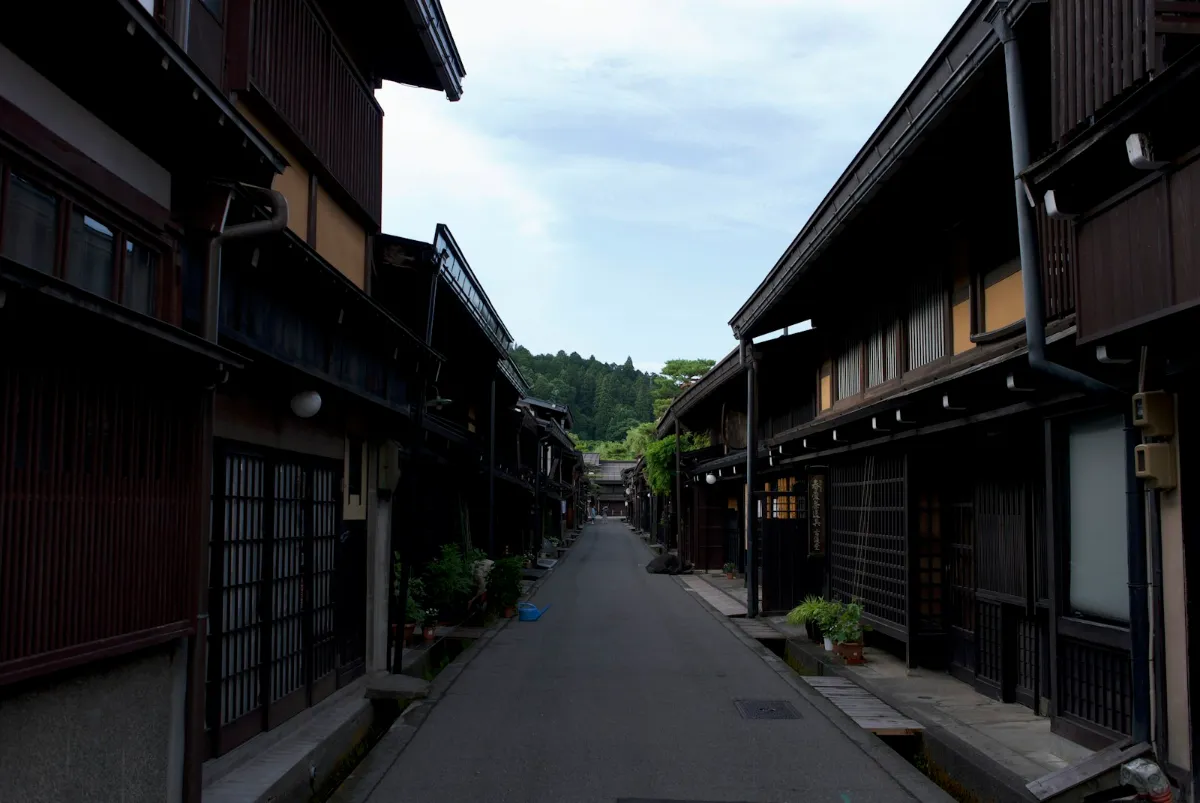
If you only have one day, this route is all on foot. Start early: Takayama is calm before 9am and the day-trip buses arrive mid-morning.
Morning (7am–10am): the Miyagawa and Jinya-mae morning markets
Takayama has two morning markets (asaichi). The Miyagawa Morning Market runs along the east bank of the Miyagawa River from 7am to noon (8am to noon from December to March). The smaller Jinya-mae Morning Market is in front of Takayama Jinya from 6am to noon (7am to noon from January to March). Both are open daily and about a 10-minute walk from the station.
Kojiro’s human says: The morning markets are full of local ingredients, super fresh, and you’ll find rare little delicacies you won’t see in everyday shops. Go in treasure-hunt mode – that’s where the fun is!

Mid-morning (9am–10:30am): Takayama Jinya
Takayama Jinya is the only surviving government office of its kind from the Edo period, with tatami rooms, an old rice storehouse and a garden. Entry is ¥500 (free for 18 and under). It opens at 8:45am and closes at 5pm from April to October, or 4:30pm from November to March; the ticket window closes 30 minutes earlier. It is closed from December 29 to January 3. Allow about an hour.
Late morning to lunch: eat your way through the Sanmachi old town
Cross the Nakabashi Bridge to the Sanmachi area (Kami-Sannomachi and its neighboring streets), the best-preserved part of the old town, with dark wooden merchant houses, sake breweries marked by round cedar balls (sugidama) and small food stands. The streets are free to walk.
Kojiro’s human says: The old town is all about eating as you go – eat, eat and eat some more!
Hayate’s secret ninja tip: In Japan, eating while walking through a crowd is seen as bad manners. Buy your snack, then step aside and eat it right by the stand. Public trash bins are rare, and Takayama’s “with Respect” manners campaign asks visitors to carry their trash with them, so keep a small bag in your pocket.
Kojiro approves! For Hida beef, the must-try snack here is Hida beef nigiri sushi: seared slices of local wagyu on rice, served on a crispy rice cracker instead of a plate.
Kojiro’s human says: For Hida beef sushi, my number one in Takayama is Hida Kotte-ushi in the old town (Kami-Sannomachi) – theirs is the tastiest!
- Hida Kotte-ushi (飛騨こって牛): 82 Kami-Sannomachi, about 15 minutes on foot from Takayama Station. Open 10am–5pm (closed days are posted on the shop’s calendar). Two pieces of Hida beef nigiri cost ¥800, and a three-piece set ¥1,200 (official menu, checked October 2026).
- Good to know: no reservations, and there can be a line in busy seasons. Each order is cooked fresh, and you can eat it in the shop’s seating space. If the line is long, the shop suggests its sister store, Kin no Kotte-ushi, about 3 minutes away on Kami-Ninomachi.

Kojiro’s human says: You have to try Hida beef! In my opinion, Japanese beef is the best quality in the world, and almost everyone in Japan knows Hida beef. Skip it and you’ll regret it.
More places to try, from sushi to a charcoal-grill dinner: where to eat Hida beef in Takayama.
Afternoon (1pm–4pm): festival floats and the Higashiyama temple walk
Walk north through the old town to Sakurayama Hachimangu Shrine, home of the autumn Takayama Festival. Next to it, the Takayama Festival Floats Exhibition Hall (Yatai Kaikan) displays real festival floats year-round: ¥1,000 including the neighboring Nikkokan hall, open 9am–5pm (until 4:30pm from December to February), about 45 minutes.
If you’d rather walk, the Higashiyama Walking Course is a free, signposted 3.5 km loop past more than a dozen temples and shrines and the ruins of Takayama Castle on Shiroyama hill. It takes 1–2 hours and is the quiet side of Takayama most day-trippers never see.
Evening: a charcoal-grill dinner in Dekonaru Yokocho
Takayama goes quiet early, so plan dinner. Dekonaru Yokocho is a small food-stall alley (yatai-mura) near Takayama Station in the Asahi-machi area, opened in 2016, with small counter restaurants side by side.
Kojiro’s human says: For dinner, head to Sumibiyaki Sansaku (炭火焼 三三九) in Dekonaru Yokocho! They use all kinds of Takayama ingredients, everything’s super fresh and the cooking is seriously good – and it’s all grilled over charcoal. Get the seasonal sour! Honestly, whatever you order is delicious. They don’t take reservations, so get there around 6 pm – just 30 minutes later there’s a line outside.
How to find it: I couldn’t confirm Sansaku’s current opening hours and closed days online (the Dekonaru Yokocho website was down for maintenance when I checked in October 2026). Search “Dekonaru Yokocho” in Google Maps, check the latest hours there, and ask for Sansaku when you arrive.
Takayama 2 day itinerary with Shirakawago
Day 1: follow the 1-day itinerary above. Day 2: spend it at Shirakawa-go, the UNESCO World Heritage village of steep thatched gassho-zukuri farmhouses.
- Getting there: Nohi Bus from the Takayama Nohi Bus Center (next to JR Takayama Station) to Shirakawa-go takes about 50 minutes and costs ¥2,800 one way. Some buses are reserved and some are non-reserved.
- Book early: in autumn, winter and Japanese holidays, reserved seats sell out. My Takayama to Shirakawa-go bus guide shows how to book on Japan Bus Online, step by step.
- Flexible on times? Check dates and prices for a non-reserved Shirakawa-go Line bus ticket on Klook, then line up early at the bus stop.
- Rather not plan buses at all? Compare guided options in my Shirakawa-go day tours guide, including the local Nohi Bus sightseeing tour from Takayama.
- Time needed: 3–4 hours in the village is enough for the main street, a farmhouse museum and the viewpoint. Take an early bus, and you’re back in Takayama for dinner.
Already seen Shirakawa-go? Spend Day 2 at Hida Folk Village (Hida no Sato) instead: an open-air museum of old Hida farmhouses, including gassho-zukuri houses, around a pond. It’s ¥700, open 8:30am–5pm daily, and about 10 minutes from the station by Sarubobo Bus (¥100 a ride, or a ¥500 one-day pass for the town buses). Allow about 2 hours. You don’t need a tour or set ticket here: just pay at the gate.
Takayama 3 day itinerary: Okuhida, Hida-Furukawa or Kanazawa
With a third day, pick the trip that fits you:
- For mountain views and onsen: Okuhida and the Shinhotaka Ropeway. Direct buses from Takayama take about 90 minutes. The ropeway runs year-round (weather permitting) and climbs in two stages to a viewing deck facing the Northern Japanese Alps; a round trip costs ¥3,800 (official fare, checked October 2026). Okuhida’s hot-spring villages make it a perfect half-day soak on the way back. Check prices for the Shin-Hotaka Ropeway round-trip ticket on Klook. Full guide: Shinhotaka Ropeway and Okuhida Onsen day trip from Takayama.
- For a quiet small town: Hida-Furukawa. Just 15 minutes by JR local train (¥240), with white-walled storehouses and a canal full of carp. It’s a gentle half day.
- For moving on: Shirakawa-go to Kanazawa. If Kanazawa is next on your trip, take your luggage on the bus via Shirakawa-go. Takayama to Kanazawa Station is about 2 hours 15 minutes (¥4,200 one way), and you can break the trip at Shirakawa-go with a separate ticket for each leg.
Hayate’s secret ninja tip: Kamikochi, the famous alpine valley, is closed to traffic in winter (roughly mid-November to mid-April). From late autumn to spring, choose the Shinhotaka Ropeway for Alps views instead.
Takayama itinerary in winter: what to wear and what changes
Takayama sits high in the mountains, and winter is real winter. Japan Meteorological Agency normals for Takayama (1991–2020) show an average January high of 3.2°C (38°F), an average low of −4.8°C (23°F), and about 117 cm (46 in) of snowfall in January.
Kojiro’s human says: Winter in Takayama is seriously cold. A down jacket is a must! And watch out for icy streets so you don’t slip and fall.
- What to wear: a down jacket, warm layers, gloves, a hat and waterproof shoes or boots with a good grip. Snow-covered streets get icy in the morning and evening.
- Shorter hours: Takayama Jinya closes at 4:30pm from November to March, the Festival Floats Exhibition Hall at 4:30pm from December to February, and the Miyagawa market opens an hour later (8am). Start sightseeing a little later and finish earlier.
- Snow and buses: roads to Shirakawa-go and Okuhida can be delayed by snow, so book a bus one earlier than you think you need, and never plan a tight connection.
- Winter highlight: the Shirakawa-go Light-Up on January 11, 17, 24 and 31, 2027 is reservation-only. See my Shirakawago Light-Up 2027 guide for the ways to get in.
- New Year: Takayama Jinya is closed from December 29 to January 3, and many small shops take holidays too.
Winter 2-day plan: Day 1, a slow old-town day with warm snacks and an early dinner. Day 2, Shirakawa-go in the snow (or the Light-Up evening tour on event dates). Day 3 (optional), the Shinhotaka Ropeway for snowy Alps views, then a soak in Okuhida.
How to get to Takayama from Tokyo, Kyoto, Osaka and Nagoya
| From | Best route | Time | Approx. cost (one way) |
|---|---|---|---|
| Nagoya | JR Limited Express Hida | About 2.5 hours | ¥6,140 (reserved seat) |
| Tokyo | Tokaido Shinkansen to Nagoya + Limited Express Hida | About 4.5 hours | About ¥16,000 (JR Pass OK with Hikari) |
| Tokyo (budget) | Highway bus from Busta Shinjuku | About 5.5 hours | From about ¥8,000 |
| Kyoto / Osaka | One direct Limited Express Hida a day, or Shinkansen to Nagoya + Hida | About 4 hours | About ¥8,450 from Osaka on the direct train (reserved seat, standard season); a little less from Kyoto |
| Kanazawa | Highway bus via Shirakawa-go | About 2 hours 15 minutes | ¥4,200 |
Fares and times were checked in October 2026 and can change by date, so check before you book. For every route step by step, see how to get to Takayama. Flying into Chubu Centrair Airport? My Takayama to Shirakawa-go bus guide covers the whole route from the airport, including why I like the highway bus for big suitcases.
Where to stay for your Takayama itinerary
For a 2–3 day itinerary, stay near JR Takayama Station: the trains, the Nohi Bus Center for Shirakawa-go and Okuhida, and the old town are all within walking distance. Book early for the spring and autumn festivals, autumn leaves and New Year. My where to stay in Takayama guide compares areas, ryokan and minpaku in detail.
| Pick | Area | Price level | Best for |
|---|---|---|---|
| Residence Hotel Takayama Station | By the station | $$ | Early buses, families, longer stays |
| Honjin Hiranoya Kachoan | Old town | $$$$ | A ryokan night with dinner and baths |
- Residence Hotel Takayama Station. Best for: travelers catching early buses or staying several nights. Not for: anyone who wants a traditional ryokan atmosphere. Rating: 4.9/5 from 1K+ Klook reviews (checked October 2026). Check dates and prices for Residence Hotel Takayama Station on Klook
- Honjin Hiranoya Kachoan. Best for: a special night with a traditional ryokan experience close to the old town. Not for: tight budgets. Rating: 4.7/5 from 259 Klook reviews (checked October 2026). Check dates and prices for Honjin Hiranoya Kachoan on Klook
- Want more choice? Compare all Takayama hotels and guesthouses on Klook, and check each property’s cancellation policy before you book.
Takayama tours: what to book and what to skip
What to skip: you don’t need a tour for Takayama itself. The old town, the morning markets and the Higashiyama walk are free and easy to do on your own, and tickets for Takayama Jinya and Hida Folk Village are sold at the gate. Spend your money on these instead:
- Takayama and Shirakawa-go day tour from Nagoya. Best for: travelers based in Nagoya with only one day. Not for: anyone who wants a slow day, since you get about 2 hours in each place. Departs from Nagoya Station; guides speak Chinese, English and Japanese. Rating: 4.6/5 from 2,712 Klook reviews. Check dates and prices for the Takayama and Shirakawa-go day tour from Nagoya on Klook
- Hirata Sake Brewery Tour. Best for: sake lovers who want to see a Takayama brewery from the inside, with a tasting. Not for: under-20s or drivers (Japan’s drinking age is 20, so bring ID). About 40 minutes, in English or Japanese. Rating: 5.0/5 from 4 Klook reviews. Check dates for the Hirata Sake Brewery Tour on Klook
- Shin-Hotaka Ropeway ticket. Best for: Day 3 in Okuhida if you want to skip the ticket machine line. Rating: 4.6/5 from 111 Klook reviews. Check prices for the Shin-Hotaka Ropeway ticket on Klook
What travelers say (from Klook reviews, checked October 2026):
- Nagoya day tour: reviewers often mention an easy-to-find meeting point at Nagoya Station, helpful guides with walking routes and food tips, and no stress about bus tickets. The most common complaint is time: about 2 hours per stop feels short, and several reviewers say there is barely time for lunch, so bring a snack.
- Shin-Hotaka Ropeway ticket: reviewers say the e-voucher is quick to exchange for a paper ticket at the counter and the snowy Alps views are worth it. They warn that it is very cold at the top and that lines form on holidays.
Before you go: eSIM, cash and luggage
- Stay connected: bus times, maps and restaurant hours are all on your phone. Get an Airalo Japan eSIM before you fly.
- Rail pass: the Limited Express Hida and the JR local train to Hida-Furukawa are covered by the Japan Rail Pass. Nohi Bus to Shirakawa-go and Okuhida is not.
- Cash: carry some yen for market stalls, food stands and the town buses.
- Luggage: moving on via Shirakawa-go? Highway buses take big suitcases in the luggage compartment, which makes the Takayama–Shirakawa-go–Kanazawa route easy.
Takayama itinerary FAQ
Is one day in Takayama enough?
For the old town, the morning market and Takayama Jinya, yes. If you also want Shirakawa-go, plan 2 days.
How many days do you need for Takayama and Shirakawago?
Two days: one for Takayama and one for Shirakawa-go. You can see both in one day on a tour from Nagoya, but you only get about 2 hours in each place.
Is Takayama worth visiting in winter?
Yes, if you dress for it. Snow on the old roofs is beautiful and January brings the Shirakawa-go Light-Up, but it is cold (average January low around −5°C) and streets can be icy.
Can you do Takayama as a day trip from Tokyo?
It is possible but long: about 4.5 hours each way by train. Spend at least one night.
What can you do in Takayama at night?
Takayama is quiet after dark. Have an early dinner in Dekonaru Yokocho or an izakaya, walk the lantern-lit old town, and soak in your hotel or ryokan bath.
Is Takayama good with kids?
Yes. The old town is compact, and Hida Folk Village, the festival floats hall and the Shinhotaka Ropeway are easy, family-friendly trips.
More Takayama and Shirakawa-go guides
- Hida-Furukawa day trip from Takayama: the koi canal, Your Name locations and winter tips, 15 minutes by train
- Shinhotaka Ropeway and Okuhida Onsen day trip: bus from Takayama, tickets, winter hours and day-trip hot springs
- Takayama old town and morning markets: a local’s walking guide with market hours and street food
- How to get to Takayama: direct bus vs Hida train from Tokyo, Kyoto, Osaka, Nagoya and Kanazawa
- Where to eat Hida beef in Takayama: old town sushi, dinner near the station and Hida beef vs Kobe beef
- Where to stay in Takayama: the best areas, hotels near the station and ryokan, from a local
- Takayama to Shirakawa-go bus: how to book, fares and what to do if it’s sold out
- Shirakawago guided tours and day trips: from Nagoya, Takayama and Kanazawa
- Shirakawago Light-Up 2027: dates, tickets and local tips
- Shirakawago farmhouse stay: how to book a night in a gassho-zukuri house, prices and house rules
- Takayama in winter: weather, snow, what to wear and things to do from December to March
- Kyoto itinerary for 2 or 3 days: if Kyoto is next on your trip
Last checked on official sites: October 2026. Prices, hours and schedules can change, so check before you go.
This post contains affiliate links. If you book through them, I may earn a small commission at no extra cost to you. Restaurant picks are my own local recommendations, with no affiliate links.
Kojiro and Hayate are AI-generated characters; all character images are AI-generated illustrations.
Sources: Takayama Jinya: hours and admission (official) · Hida Kotte-ushi (official) · Shinhotaka Ropeway fares (official) · Takayama City: transportation · Takayama morning markets (japan-guide.com) · Getting to Takayama (japan-guide.com) · Limited Express Hida timetable and fares (Ekitan) · Takayama climate table (Japan Meteorological Agency normals, via Wikipedia)