Every November, Kyoto’s maples turn the temples red, orange and gold, and travelers from all over the world come to see it. Kojiro came for the views (and the snacks). Hayate came to make sure Kojiro gets there before the crowds do. This guide covers the 2026 peak forecast, the best places to see the leaves, the night light-ups with dates and prices, and the few things you really need to book ahead.

Kyoto autumn leaves 2026 at a glance
| Best time (2026 forecast) | About November 20 to early December for most city temples; Arashiyama from mid-to-late November |
| Time needed | 1 day for 2–3 spots plus one night light-up; 2–3 days to see east, west and north Kyoto |
| Budget | Temple entry ¥500–¥1,500 each (about $3–$10); a full foliage day with transport and food: about ¥6,000–¥10,000 ($40–$67) |
| Ease of access | Easy: 2h15m from Tokyo by Nozomi shinkansen, about 30 minutes from Osaka. Buses are slow in late November, so use trains and the subway |
USD figures are rough, at about ¥150 = $1.
Table of contents
- Kyoto autumn leaves 2026 at a glance
- Kyoto autumn leaves forecast 2026: when is peak foliage?
- Best places to see autumn leaves in Kyoto
- Best places to see fall foliage in Kyoto that aren’t too crowded
- Kyoto autumn illumination 2026: light-up dates and prices
- What to book in advance for Kyoto in autumn
- Kyoto in November: crowds, weather and what to wear
- How to get to Kyoto and around in foliage season
- A one-day Kyoto autumn leaves itinerary
- Where to stay in Kyoto for autumn leaves
- FAQ
- More Kyoto guides
Quick picks
- Visiting on your own: you don’t need a tour or tickets in advance for most temples and light-ups; you pay at the gate. Book your hotel first.
- Leaves by day and by night in one go: a guided autumn day tour to Kinkaku-ji and Arashiyama that ends with an evening maple train ride (4.6/5 from 13 Klook reviews). Check dates and prices for the Kyoto autumn foliage day tour on Klook
- A warm base near Kyoto Station: a hotel with a natural hot-spring bath, 6 minutes on foot from the station (5.0/5 from 1,114 Klook reviews). Check dates and prices for Dormy Inn Premium Kyoto Ekimae on Klook
Kyoto autumn leaves forecast 2026: when is peak foliage?
Short answer: late November is the safest bet in 2026, running into the first days of December. A warm autumn has slowed the colors down a little this year, and the forecasters disagree by about a week, so here is what each one says:
| Forecaster | Spot | 2026 forecast peak |
|---|---|---|
| Japan Weather Association (tenki.jp), updated Oct 27 | Arashiyama | From about Nov 13 |
| Japan Weather Association (tenki.jp) | Eikando | Late November to early December (a normal year is mid-to-late November) |
| Weathernews, 2nd forecast, Oct 8 | Arashiyama | Around Nov 24, slightly later than usual |
| Weathernews | Tofukuji | From about Nov 22; leaves start falling around Dec 9 |
As of October 26, the leaves at Arashiyama, Eikando, Kiyomizu-dera and Tofukuji were all still green. Mountain areas north of the city (Takao, Ohara) usually turn first, the big temples in the city follow, and Kiyomizu-dera and Tofukuji tend to hold their color into early December.
Hayate’s Secret ninja tip: forecasts are updated every one or two weeks. Check tenki.jp’s Kyoto koyo page a week before you go and pick your temples by what is actually red, not by last year’s photos.
Best places to see autumn leaves in Kyoto
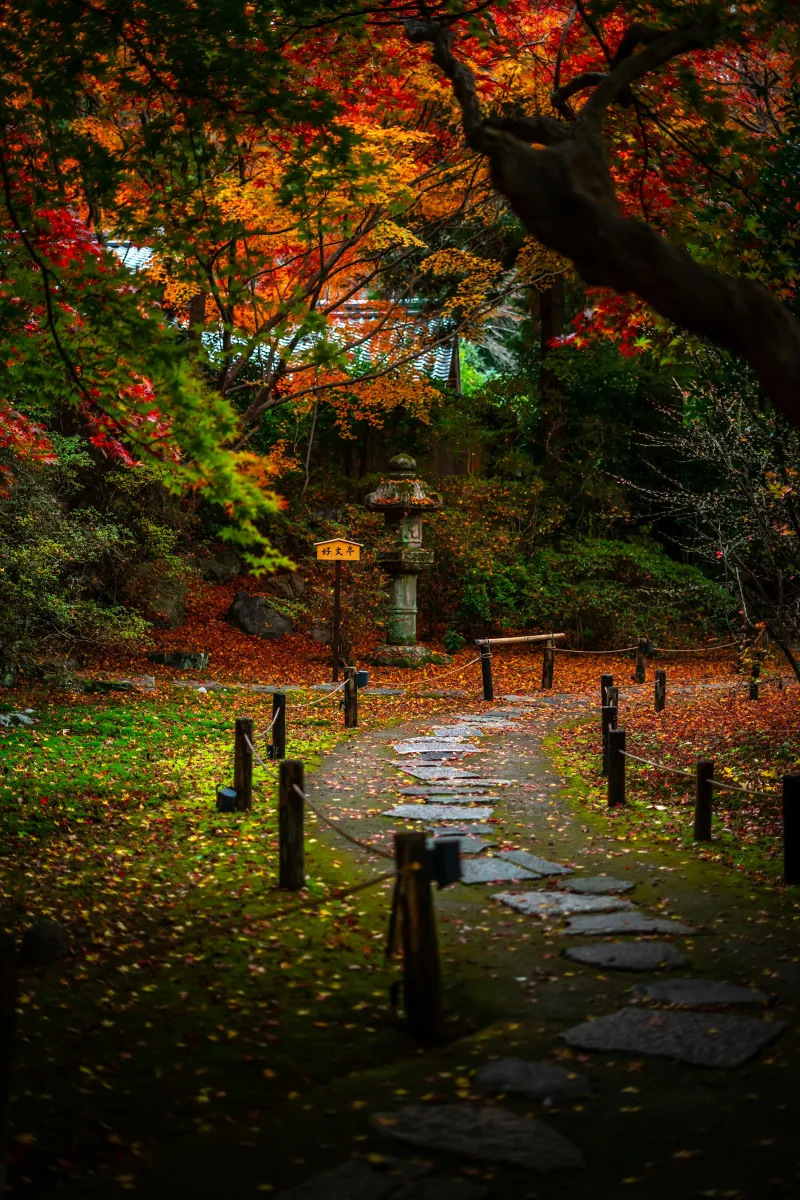
These are the classic spots, all worth the crowds if you go at the right time of day.
- Tofukuji (東福寺) – the famous “sea of maples” seen from the Tsutenkyo wooden bridge. Usually peaks mid-November to early December. From Nov 7 to Dec 6 it is open 8:30–16:00. Weathernews lists the bridge at ¥1,000 from Nov 18 to Dec 6 (¥600 the rest of the year); check the temple’s notice for the final 2026 price. Photos may be banned on the bridge when it is very crowded, and there is no parking in the season. 10 minutes on foot from JR/Keihan Tofukuji Station.
- Eikando (永観堂) – known in Japan simply as “maples at Eikando”, with a pagoda above a pond full of reflections. Great for the evening light-up (see below). Private cars and large tour buses cannot drive up during the season.
- Kiyomizu-dera (清水寺) – the wooden stage floating over a valley of red trees. Peaks late November to early December. See our Kiyomizu-dera guide for tickets and the walk down to Gion.
- Arashiyama (嵐山) – mountainsides of color above the river, plus Tenryuji’s garden and Hogon-in. Tenryuji opens its garden early (from 7:30) from Nov 14 to 30. Our Arashiyama guide has the full day plan.
- Kitano Tenmangu Momiji-en (北野天満宮 もみじ苑) – a maple garden along a small stream, open from Nov 7 to Dec 6, 2026, by day and lit up after sunset. Its colors often last longer than most.
- Ginkakuji and the Philosopher’s Path – a gentle walk lined with trees, ending near Eikando and Nanzen-ji. See our Ginkakuji & Philosopher’s Path guide.

Best places to see fall foliage in Kyoto that aren’t too crowded
Honest note from Hayate: in late November, nowhere famous in Kyoto is empty. These spots are calmer, or can be made calmer by booking a time slot.
- Enkoji (圓光寺), north Kyoto – a small Zen garden with a famous maple view from the hall. Nov 10 to Dec 10, 2026, entry is by timed online reservation only (adults ¥1,500, 9:00–17:00), which keeps crowds down.
- Kyoto Imperial Palace grounds (Kyoto Gyoen) – wide, free and full of yellow ginkgo and maples. Good for a picnic break between temples.
- Ohara (Sanzen-in) – red maples over a moss garden in the hills, about an hour by bus from Kyoto Station. Go early on a weekday.
- Chishaku-in (智積院) – near Kyoto National Museum, with a quiet garden and its own light-up in November.
Kyoto autumn illumination 2026: light-up dates and prices
In autumn many temples reopen after dark, with the maples lit from below. It is the most magical way to see Kyoto in the season, and most light-ups don’t need a reservation: you just queue and pay at the gate. Dates below are from Kyoto City’s official tourism sites (checked October 2026).
| Temple | 2026 dates | Hours | Adult price |
|---|---|---|---|
| Kodaiji | Oct 23 – Dec 13 | 17:00–22:00 (last entry 21:30) | ¥800 |
| Toji | Oct 31 – Dec 13 | 18:00–21:30 (last entry 21:00) | ¥1,000 |
| Higashi Hongan-ji & Shosei-en “NAKED GARDEN NIGHTS” | Oct 31 – Dec 6 | 18:00–22:00 (last entry 21:00) | From ¥1,900 (online early-bird, Mon–Thu); Shosei-en garden only on Nov 6–8 and Nov 25 |
| Shoren-in | Nov 6 – Dec 6 | 18:00–22:00 (last entry 21:30) | ¥1,500 |
| Chishaku-in | Nov 7 – Dec 6 | 17:00–21:00 (last entry 20:40) | ¥1,500 |
| Kitano Tenmangu Momiji-en | Nov 7 – Dec 6 | 9:00–20:00, lit up from sunset (last entry 19:40) | ¥1,500 |
| Hogon-in (Arashiyama) | Nov 13 – Dec 6 | 17:30–20:30 (last entry 20:00) | ¥1,000 |
| Chion-in | Nov 17 – Dec 6 | 17:30–21:30 (last entry 21:00) | ¥800 |
| Eikando | Nov 20 – Dec 6 | Entry 17:30–20:30 | ¥1,000 |
| Kiyomizu-dera | Nov 21 – Nov 30 | 17:30–21:00 | ¥500 |
What you actually see: lit maples glowing against a black sky, reflections in temple ponds, and wooden halls you normally only see by day. Light-ups are popular because the colors look even deeper at night and it’s a second “visit” in the same day.
Hayate’s Secret ninja tip: Eikando’s daytime visit and night light-up are separate tickets, and they clear the grounds in between. Go to the night session right when it opens, or about an hour before closing, when the first wave has left.
What to book in advance for Kyoto in autumn
- Your hotel – first. Late November is Kyoto’s busiest time of the year. Book as early as you can, and choose a room near a subway or train station. Check dates and prices for Kyoto hotels on Klook
- Enkoji: timed online reservation for Nov 10 to Dec 10.
- Sagano Romantic Train (Arashiyama): seats sell out in the foliage season, so reserve early on the official Sagano Romantic Train site.
- Special plans: a few temples also offer extra early-entry or after-hours plans that must be booked ahead, mostly through Japanese-language sites. They are optional; the regular light-ups above don’t need them.
- Ruriko-in: open Oct 1 to Dec 13, 2026 (10:00–17:00, ¥2,000). From Nov 13 to Dec 6 you need an advance reservation through the temple’s official site, which listed a second-round booking calendar when we checked. Outside those dates, no reservation is needed.
- Guided tour (optional): a local guide or small-group foliage tour saves a lot of route planning. Browse Kyoto tours on Klook
- eSIM: you’ll be checking maps and bus times all day. Get a Japan eSIM from Airalo
Guided autumn leaves tour: Kinkaku-ji, Arashiyama and the night maple train
| Best for | Visitors with one day who want the leaves by day and lit up at night without planning trains |
| Not for | Anyone who wants slow, unhurried time at each stop |
| Route | Kinkaku-ji and Arashiyama, ending with an evening ride on the Sagano train through lit-up maples |
| Departs from | Osaka or Kyoto |
| Duration | About 7 hours 20 minutes to 10 hours 30 minutes, depending on the option |
| Guide | English or Chinese |
| Rating | 4.6 out of 5 from 13 reviews on Klook (checked October 2026) |
| Price and cancellation | Change by date and option; check on the booking page before you book |
| Our verdict | An easy way to add the night maple train in peak season, when tickets are hard to get on your own |
What travelers say: reviewers on Klook most often praise friendly, patient guides who keep the group on time and help with photos, and call the evening train ride the highlight. One reviewer found the train moved too fast for good photos, and another had trouble finding the meeting point, so check the meeting instructions the day before.
Check dates and prices for the Kyoto autumn foliage day tour on Klook
Kyoto in November: crowds, weather and what to wear
- Weather: crisp and mostly dry. Days in late November are usually around 13–15°C (55–59°F), nights around 5°C (41°F), and temple halls are cold inside.
- What to wear: layers, a warm jacket for evening light-ups, and shoes that are easy to take off (you remove them in many halls). Thick socks help on cold wooden floors.
- Crowds: weekends and the Nov 21–23 holiday weekend are the busiest. Kyoto Prefecture and the city plan temporary traffic controls around Higashiyama and Arashiyama on Nov 21, 22, 23, 28 and 29.
- Etiquette: don’t step off paths or shake branches for photos, no tripods or selfie sticks where signs say so, and follow staff when they stop photos on busy bridges.
How to get to Kyoto and around in foliage season
| From | Route | Time | Cost (one way) |
|---|---|---|---|
| Tokyo | Tokaido Shinkansen “Nozomi” to Kyoto Station (no transfer) | About 2h15m | ¥14,170 reserved seat, regular season (about $95) |
| Osaka (Shin-Osaka) | Shinkansen to Kyoto | About 15 min | About ¥3,000 reserved seat |
| Osaka (Osaka Station) | JR Special Rapid to Kyoto | About 30 min | ¥580 |
Getting around: the Subway & Bus 1-Day Pass costs ¥1,100 (child ¥550). The old bus-only day pass is no longer sold. City buses crawl through traffic in late November, so use the subway, JR (for Tofukuji and Arashiyama) and the Keihan line (for Tofukuji and Gion) wherever you can. An IC card such as Suica or ICOCA works on all of them. Coming from Tokyo? See the Japan Rail Pass on Klook
Luggage: Kyoto Station’s coin lockers fill up by mid-morning in peak season. Use a luggage drop service or send your suitcase ahead to your hotel with a delivery service (ask at your hotel’s front desk).
A one-day Kyoto autumn leaves itinerary
- 8:15 Tofukuji – be at the gate before it opens at 8:30, see the Tsutenkyo bridge before the tour groups.
- 10:30 Fushimi Inari (optional) – two stops away on JR. See our Fushimi Inari guide.
- 12:30 Lunch near Nanzen-ji – yudofu (simmered tofu) is the classic cozy lunch here.
- 13:30 Philosopher’s Path to Eikando – a slow walk under the trees.
- Evening light-up – Eikando when it opens at 17:30, or Kodaiji and then dinner in Gion.
Kojiro approves! Hot yudofu on a cold day, roasted sweet potatoes from a street cart, and anything with matcha after a long temple walk. Hayate, of course, goes straight for the maple-shaped wagashi.

Where to stay in Kyoto for autumn leaves
- Budget: guesthouses and capsule hotels around Kyoto Station – easy for Tofukuji, Fushimi Inari and Arashiyama.
- Mid-range: hotels near Shijo / Kawaramachi – walk to Gion and Kodaiji light-ups at night.
- Splurge: a ryokan in Higashiyama or Arashiyama – wake up right next to the leaves.
Our pick near Kyoto Station: Dormy Inn Premium Kyoto Ekimae, about 6 minutes on foot from the station, with a natural hot-spring shared bath that feels great after a cold day of temples (5.0/5 from 1,114 Klook reviews). Check dates and prices for Dormy Inn Premium Kyoto Ekimae on Klook
Check late-November dates and prices for Kyoto hotels on Klook
Area-by-area picks are in Where to stay in Kyoto.
3 useful Japanese phrases: “Momiji, kirei!” (The maples are beautiful!) · “Shashin, ii desu ka?” (May I take a photo?) · “Saigo no uketsuke wa nanji desu ka?” (What time is last entry?)
Map: Tofukuji · Eikando · Kiyomizu-dera · Arashiyama · Kitano Tenmangu (opens Google Maps)
FAQ
When is peak fall foliage in Kyoto in 2026?
Forecasts point to roughly November 20 to early December for most temples, with Arashiyama from mid-to-late November. Check the latest forecast a week before your trip.
Is Kyoto worth visiting in November?
Yes – it’s one of the most beautiful times of year, with light-ups almost every night. Just book your hotel early and start your days early.
How long does peak foliage last?
Each spot looks its best for about one to two weeks, but because Kyoto has so many spots at different heights, the season as a whole runs about a month.
Do I need to book Kyoto light-ups?
Most, like Kiyomizu-dera, Kodaiji and Eikando, are pay-at-the-gate. A few special plans and garden events need advance booking, and Higashi Hongan-ji sells tickets online.
More Kyoto guides
- Kiyomizu-dera Guide: Tickets, Hours & Night Illumination 2026
- Arashiyama Guide: Bamboo Grove, Sagano Train & One-Day Itinerary
- Ginkakuji & Philosopher’s Path Guide
- Nijo Castle Guide
- Where to Stay in Kyoto
- Kyoto itinerary for 2 or 3 days: a day-by-day plan with a map
- Kurama to Kibune hike: a forest temple, the lantern steps of Kifune Shrine and the Eizan Railway
Last checked on official sites: October 2026. Dates and prices can change, so please confirm with each temple before you go.
This post contains affiliate links. If you book through them, we may earn a small commission at no extra cost to you.
Kojiro and Hayate images are AI-generated illustrations.