Kojiro had one wish for Kyoto: to walk down an old lantern-lit street “like a real samurai.” Hayate said yes, on one condition: they would follow Gion’s rules, keep to the public streets and never chase anyone for a photo. Kojiro agreed and promised to walk quietly. His armor jingled the whole way.
Gion is Kyoto’s most famous geisha district, a few blocks of wooden teahouses, stone-paved lanes and red lanterns between the Kamo River and Yasaka Shrine. Here is how to get there, the photo and private-lane rules you need to know, the best things to do by day and at night, Gion Corner tickets, tours, food and an easy itinerary.

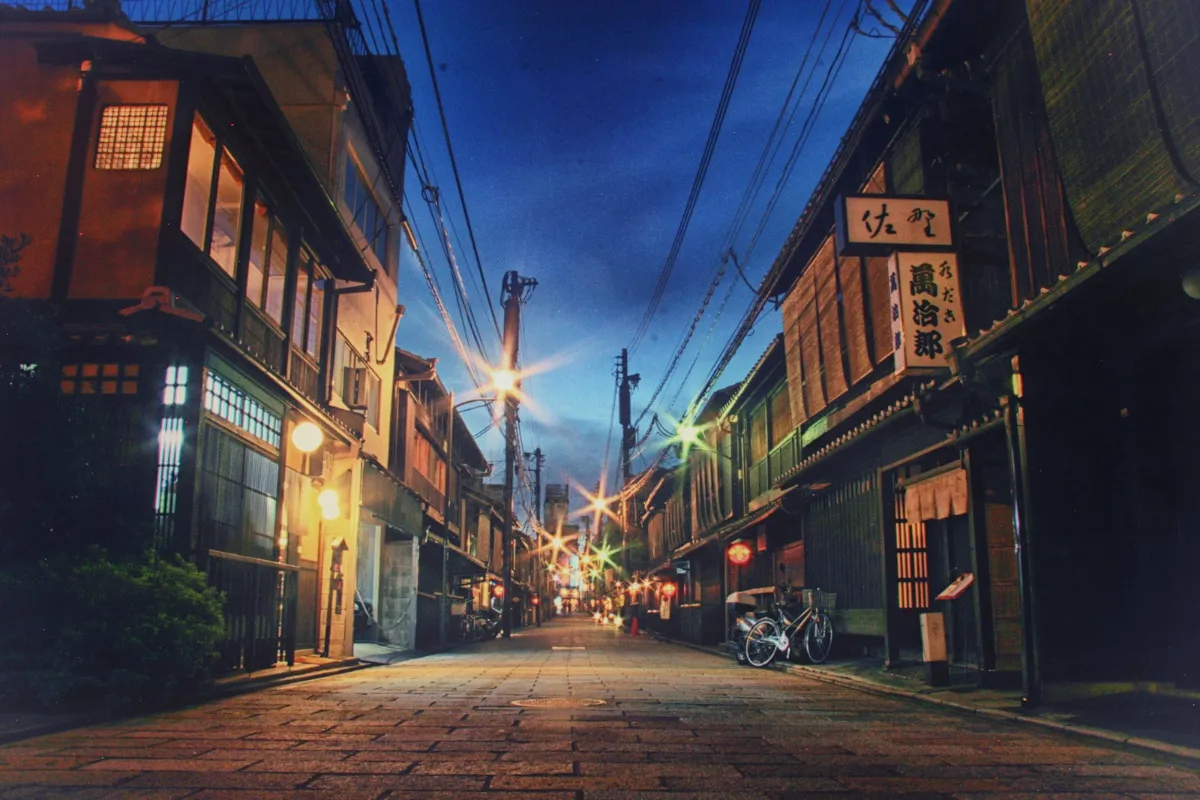
Table of contents
- Gion Kyoto at a glance: cost, time needed and best time
- How to get to Gion from Kyoto Station (and Osaka, Tokyo)
- Gion Kyoto rules: the photo ban, private lanes and the “tourist ban”
- What to do in Gion Kyoto: 7 things to see
- Gion Kyoto at night: lanterns, geisha and night walks
- Gion Corner: tickets, show times and is it worth it?
- Gion walking tours and what travelers say
- What to eat in Gion Kyoto (Kojiro approves!)
- Gion by season: autumn dances, Gion Matsuri and cherry blossoms
- Gion itinerary: a quiet morning or a lantern-lit evening
- Where to stay in Gion Kyoto
- Gion Kyoto FAQ
- More Kyoto guides
Quick picks
- Visiting on your own: Gion’s public streets are free to walk and you don’t need a tour. Respect the photo ban on private lanes.
- Understand the geisha world: a 2-hour small-group walk with an English-speaking guide (4.9/5 from 1,429 Klook reviews). Check dates and prices for the Gion Hidden Gems & Geisha Culture Tour on Klook
- Gion after dark: a 3-hour night walk with a guide (4.8/5 from 811 Klook reviews). Check dates and prices for the Gion Night Guided Walking Tour on Klook
Gion Kyoto at a glance: cost, time needed and best time
| Admission | Free to walk the streets; Yasaka Shrine is free and open 24 hours. Kennin-ji temple buildings ¥800 |
| Time needed | 2 to 3 hours for a walk; half a day with Kennin-ji, Yasaka Shrine and dinner |
| Budget | Free walk; about ¥3,000 to ¥10,000 per person with a tour, a show or dinner (our estimate) |
| Best time | Early morning (7:00 to 9:00 a.m.) for quiet streets; dusk (about 5:00 to 7:00 p.m.) for lanterns |
| Best season | Late March to early April (cherry blossoms), November (autumn colors and the Gion Odori dance) |
| Ease of access | Easy: about 20 minutes by bus from Kyoto Station, or 5 minutes on foot from Gion-Shijo Station |
Secret ninja tip: Gion is a neighborhood where people live and work, not a theme park. Stay on the main streets, step aside for anyone in kimono, and you will see the best of it.
Free printable: Kyoto Trip Checklist. What to book ahead, what to pack, Gion and Nishiki manners, three phrases and a 3-day planner on two pages. Enter your email and the download link arrives in your welcome email (see what’s inside).
How to get to Gion from Kyoto Station (and Osaka, Tokyo)
| From | Route | Time (approx.) | Cost (approx.) |
|---|---|---|---|
| Kyoto Station (easiest) | City Bus No. 206 to the Gion stop, then walk about 5 minutes to Hanamikoji | About 20 minutes, longer in traffic | ¥230 adult flat fare |
| Kyoto Station (train) | JR Nara Line to Tofukuji, change to the Keihan Line to Gion-Shijo, then walk about 5 minutes | About 15 to 20 minutes | Two short train fares |
| Nishiki Market | Walk east along Shijo-dori and cross the Kamo River | About 10 to 15 minutes on foot | Free |
| Osaka | Hankyu Kyoto Line limited express from Osaka-Umeda to Kyoto-Kawaramachi, then walk about 10 minutes; or the Keihan Line to Gion-Shijo | About 45 minutes (Hankyu) | About ¥410 (Hankyu) |
| Tokyo | Tokaido Shinkansen to Kyoto Station, then City Bus No. 206 | About 2 hours 15 minutes by Nozomi, plus about 20 minutes | About ¥14,000 one way for a reserved seat |
Times and fares are approximate, so check a route app before you go. Kyoto city buses get very crowded in peak seasons; with luggage, the train via Tofukuji is often faster. Kyoto City plans separate (higher) bus fares for non-residents from fiscal 2027, so the ¥230 fare may change. Keep Google Maps working with an Airalo Japan eSIM, and tap in with an IC card (Suica, PASMO or ICOCA). Coming from Tokyo? Compare JR Passes and Shinkansen tickets on Klook.
Open Gion (Hanamikoji Street) in Google Maps
Gion Kyoto rules: the photo ban, private lanes and the “tourist ban”
You may have read about a “Gion tourist ban.” Here is what it actually means: Gion is not closed to visitors. The rules apply to private lanes in the southern part of Gion (Gion Minamigawa), around Hanamikoji Street.
- Private lanes are off limits. In April 2024 the local district council began putting up signs on narrow private side lanes saying, in effect, “This is a private road. No through traffic,” with a warning of a ¥10,000 fine. If you see one of these signs, do not enter
- Hanamikoji Street stays open. The main Hanamikoji Street is a public road, so you can walk it freely, along with Shijo-dori, Shirakawa, Yasaka Shrine and the public streets of Higashiyama
- No photos on private lanes. Signs warning against photography on private roads (with a fine of up to ¥10,000) have been posted in the area since 2019
- Never chase or block geiko and maiko. They are usually on their way to work. Do not follow them, touch their kimono or stand in their path for a photo
- Do not enter a teahouse uninvited. Most teahouses (ochaya) are by introduction only
- Keep it quiet and tidy. No smoking on the street, take your trash with you, and do not sit on doorsteps or lean on wooden lattices
Not sure if a lane is public? Look for the bilingual signs at its entrance, and if in doubt, stay on Hanamikoji. A tip from our writer, who grew up in Takayama’s old town, where tourists walk past people’s front doors every day: locals don’t mind cameras on the main street, but they notice when someone stops in a doorway or blocks a lane. Take your photo, then step aside. A polite “Shashin, ii desu ka?” (“May I take a photo?”) before photographing any person or shop goes a long way.

Kojiro spotted a beautiful little lane and started to waddle in. A fluffy orange tail blocked the way, right next to the sign. “Private road,” said Hayate. Kojiro bowed to the sign, apologized to nobody in particular, and they went back to Hanamikoji, where the lanterns were just as pretty.
What to do in Gion Kyoto: 7 things to see
1. Hanamikoji Street
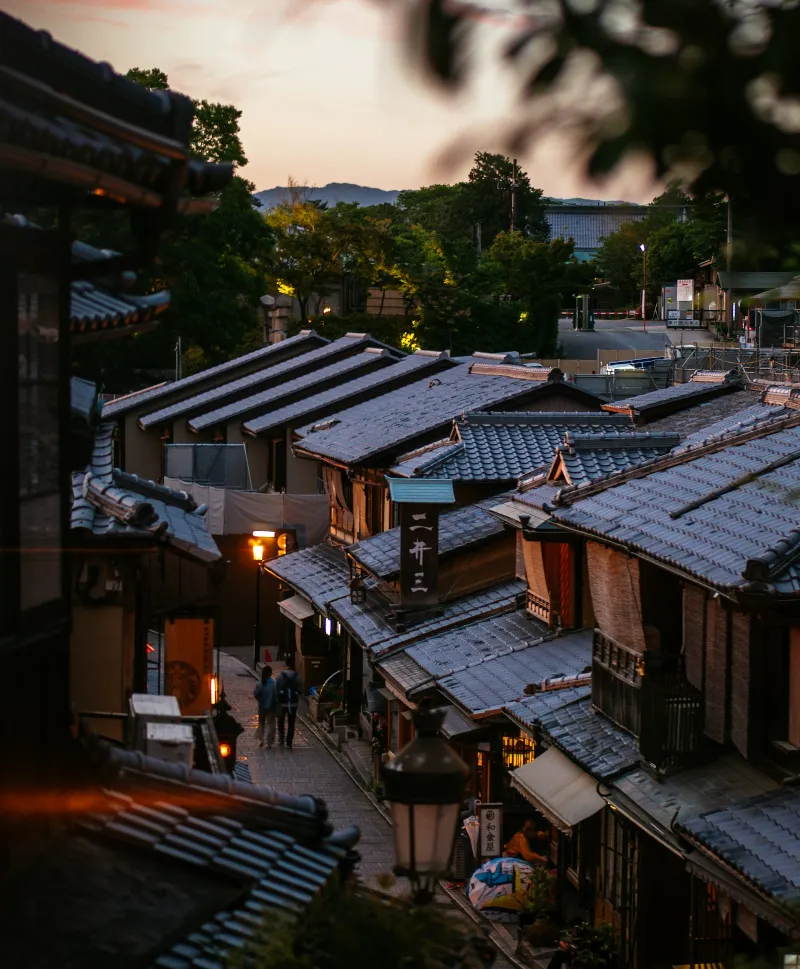
The heart of Gion: a stone-paved street lined with wooden teahouses and restaurants, running south from Shijo-dori toward Kennin-ji. It is at its most atmospheric just after the lanterns come on. The Gion Kobu Kaburenjo theater and Gion Corner stand near its south end.
2. Gion Shirakawa and Tatsumi Bridge
A short walk north of Shijo-dori, the willow-lined Shirakawa canal is the prettiest corner of Gion. Teahouses look over the water, and the little Tatsumi Bridge and Tatsumi Daimyojin shrine are classic photo spots. It is a public area, but early morning is far quieter than the evening.
3. Yasaka Shrine
The vermilion gate at the east end of Shijo-dori belongs to Yasaka Shrine, the shrine behind the Gion Matsuri festival. It is free and open 24 hours, and the dance stage hung with hundreds of lanterns is lovely after dark. Maruyama Park sits just behind it.
4. Kennin-ji Temple
Kyoto’s oldest Zen temple sits right at the south end of Hanamikoji. Look up at the twin dragons painted on the Dharma Hall ceiling, and see the famous Wind God and Thunder God screens and the quiet raked-gravel gardens. Open 10:00 a.m. to 5:00 p.m. (last entry 4:30 p.m.); admission ¥800.
5. Yasaka Koshindo and the walk to Kiyomizu-dera
South-east of Gion, the tiny Yasaka Koshindo temple is famous for its colorful cloth “kukurizaru” monkey charms, and the Yasaka Pagoda rises just above. From here the old stone lanes of Ninenzaka and Sannenzaka climb to Kiyomizu-dera.
6. Pontocho Alley
Across the Kamo River, Pontocho is a narrow lantern-lit alley packed with restaurants, many with riverside terraces in summer. “Gion vs Pontocho?” Do both: Gion for the walk, Pontocho for dinner.
7. A tea ceremony or a kimono walk
Gion is full of small cultural experiences: tea ceremonies, kimono rental, chopstick-making and kintsugi workshops. Traditional tea ceremony with matcha and sweets in Gion is a popular pick (rated 4.9 by about 130 reviewers on Klook).
Make your own chopsticks in Gion
A short, hands-on workshop where you shave, sand and polish your own pair of wooden chopsticks. The studio is in the Gion area near Yasaka Pagoda, so it fits easily into a walk between Kiyomizu-dera and Gion. It is one of the best-reviewed experiences in Kyoto on Klook.
| Best for | Families with kids, couples, and anyone who wants a souvenir they made themselves |
| Not for | Travelers who want a traditional craft master; instructors are friendly English-speaking staff |
| Duration | Klook lists 30 minutes; reviewers say the whole workshop takes about 1 hour |
| Price | From about US$6 on Klook when we checked; 2 wood types are included, others cost ¥1,000 to ¥5,000 extra, and name engraving is extra |
| Rating | 5.0 out of 5 from 3,787 reviews on Klook, with 20K+ bookings (checked October 2026) |
| Cancellation | Check the terms on the booking page before you book |
| Our verdict | Cheap, fun and indoors: a great rainy-day or kids pick in Gion |
What travelers say: reviewers keep naming their instructors and say they were patient and spoke good English. Kids aged about 8 to 10 managed fine. Tables seat up to about 6 people. The one thing to know: nicer woods and engraving add to the price.
Check dates and prices for the Gion chopstick workshop on Klook
Gion Kyoto at night: lanterns, geisha and night walks
“Is Gion worth visiting at night?” Yes, for the atmosphere: the lanterns come on, the wooden facades glow, and Shirakawa and Yasaka Shrine look like a postcard. Early evening, roughly 5:30 to 7:00 p.m., is also when geiko and maiko may be on their way to appointments, but sightings are never guaranteed, and the polite way to “see a geisha” is from a distance, without following.
- Walk Shirakawa at blue hour, then Hanamikoji as the lanterns come on
- Finish at Yasaka Shrine, lit up after dark
- Most shops close early in the evening, but restaurants and bars stay open
- A guided night walk explains what you are looking at (and keeps you on the right side of the rules)

Gion Corner: tickets, show times and is it worth it?
Gion Corner, on Hanamikoji Street, packs several traditional arts into about 50 minutes: tea ceremony, koto music, flower arrangement, bugaku court dance, kyogen comedy, bunraku puppet theater or noh (depending on the month; neither is in the winter program) and a kyomai dance by maiko. The program can change, so check the official site.
| Show times | 6:00 p.m. and 7:00 p.m. daily (December 1 to March 11: Tuesday to Friday only, excluding holidays) |
| Closed | July 16, August 16, December 26 to January 4, February 11 and 23 |
| Tickets | Adult ¥5,500; seat with tea and sweets ¥6,050; premium seat ¥6,600; age 16 to 22 ¥3,850; age 7 to 15 ¥3,300 |
| How to book | Online in advance on the official site, or at the window on the day if seats remain |
Is it worth it? It is a good one-hour introduction if you are curious about many arts at once, and one of the easiest ways for visitors to see a maiko dance. It is not a private geisha dinner, so set your expectations. You can also book check dates and prices for Gion Corner tickets on Klook (rated 4.3 by 242 reviewers; from about US$38 when we checked). Reviewers like the variety and the English explanations, recommend picking up the printed program and arriving at least 10 minutes early, and note that photos and video are not allowed during the performance.
Gion walking tours and what travelers say
A good guide shows you which lanes are public, explains the geiko and maiko world, and takes you to corners you would walk past alone.
Gion Hidden Gems & Geisha Culture Tour
Kyoto: Gion Hidden Gems & Geisha Culture Tour: about 2 hours, small group, starting at Shirakawa and ending on Hanamikoji; rated 4.9 by about 1,400 reviewers.
- Reviewers repeatedly praise warm, knowledgeable guides and small groups that feel almost private
- Many say it took them to quiet streets they would not have found alone
- Some groups saw a geiko or maiko, others did not; reviewers suggest an evening slot and comfortable shoes
| Best for | First-timers who want to understand the geiko and maiko world and find quiet lanes |
| Not for | Anyone hoping for a guaranteed geisha sighting (some groups see one, some do not) |
| Duration | About 2 hours, small group |
| Guide | English |
| Price | From about US$15 per person on Klook when we checked |
| Rating | 4.9 out of 5 from 1,429 reviews on Klook (checked October 2026) |
| Cancellation | Check the terms on the booking page before you book |
Check dates and prices for the Gion Hidden Gems & Geisha Culture Tour on Klook
Gion Night Guided Walking Tour (3 hours)
Kyoto Gion Night Guided Walking Tour: about 3 hours after dark; rated 4.8 by about 800 reviewers.
- Reviewers love seeing Gion and the pagoda at night with fewer crowds
- Guides get praise for clear explanations of shrines, temples and geiko traditions
- One reviewer felt it was a little short; others said three hours passed quickly with regular stops
| Best for | Travelers who want lantern-lit Gion and the Yasaka pagoda after dark |
| Not for | Families with small children (3 hours of evening walking) |
| Duration | About 3 hours |
| Guide | English |
| Price | From about US$32 per person on Klook when we checked |
| Rating | 4.8 out of 5 from 811 reviews on Klook (checked October 2026) |
| Cancellation | Check the terms on the booking page before you book |
Check dates and prices for the Gion Night Guided Walking Tour on Klook
Ratings and review themes as shown on Klook in October 2026. Check the latest reviews and meeting points before booking.
What to eat in Gion Kyoto (Kojiro approves!)
- Matcha sweets: parfaits, soft-serve and warabi-mochi in Gion’s tea houses. Hayate tries to stay cool near wagashi. He does not succeed
- Kyoto kaiseki and obanzai: refined multi-course meals or homestyle Kyoto side dishes; many Gion restaurants need a reservation, especially for dinner
- Ramen and casual dinners: along Shijo-dori and toward Kawaramachi for budget meals
- Nishiki Market: a 10 to 15 minute walk west for a daytime tasting walk (most shops close around 6:00 p.m.)
- Pontocho: the easiest place nearby for an evening meal by the river
Kojiro approves! A matcha soft-serve, eaten standing politely next to the shop, is the best fuel for a Gion walk.
Gion by season: autumn dances, Gion Matsuri and cherry blossoms
- Autumn (October to early December): mild days and cool evenings; bring a light jacket. The Gion Odori dance by Gion Higashi’s geiko and maiko is held every year from November 1 to 10 at the Gion Kaikan theater. Autumn leaves peak in late November
- Winter: cold but quiet, a lovely time for a morning walk. Gion Corner runs fewer days from December 1 to March 11
- Spring: cherry blossoms along Shirakawa (usually late March to early April) and the Miyako Odori spring dances; this is the busiest season
- Summer: hot and humid. The Gion Matsuri festival fills all of July, with the big float parades on July 17 and 24
Gion itinerary: a quiet morning or a lantern-lit evening
Quiet morning plan (about 4 hours)
- 7:30 Yasaka Shrine, almost empty
- 8:00 Shirakawa and Tatsumi Bridge in the morning light
- 8:45 Hanamikoji Street before the crowds
- 10:00 Kennin-ji when it opens
- 11:00 Walk up via Yasaka Koshindo and Sannenzaka to Kiyomizu-dera
Lantern-lit evening plan (about 4 hours)
- 15:30 Kennin-ji (last entry 4:30 p.m.)
- 16:45 Matcha break near Hanamikoji
- 17:15 Shirakawa at blue hour
- 18:00 Gion Corner, or a guided night walk
- 19:00 Dinner in Pontocho, then Yasaka Shrine lit up
Kojiro waddled the whole route. Every time he turned a corner, Hayate was already there in a little puff of smoke, holding a matcha soft-serve for two.
Where to stay in Gion Kyoto
Staying in or near Gion lets you see the streets early in the morning and late in the evening, when day-trippers have gone. Gion and Higashiyama suit couples and first-timers who want atmosphere; Kawaramachi, just across the river, is cheaper, livelier and better connected by train.
- Our Gion pick: Kyoto Granbell Hotel, about 3 minutes on foot from Gion-Shijo Station, with a shared bath (4.7/5 from 1,004 Klook reviews). Check dates and prices for Kyoto Granbell Hotel on Klook
- Areas, budgets and our hotel picks: Where to Stay in Kyoto: Kojiro & Hayate’s Hotel Picks
- Browse Kyoto hotels on Klook (search for Gion or Higashiyama on the map)
Gion Kyoto FAQ
Is Gion worth visiting?
Yes. It is free, central and one of the best-preserved old districts in Kyoto. Go early in the morning or at dusk, and combine it with Yasaka Shrine and Kiyomizu-dera.
Is there a tourist ban in Gion?
Not a full ban. Since April 2024, some private lanes in southern Gion are closed to tourists and marked with signs (with a warning of a ¥10,000 fine). Hanamikoji Street and the other public streets remain open.
Can you take photos in Gion?
Yes, on public streets. Do not photograph on private lanes, and never photograph geiko or maiko without permission or by following them.
What is the best time to see a geisha in Gion?
Early evening is when geiko and maiko may be walking to appointments, but there is no guarantee. A respectful way to see a maiko perform is Gion Corner, or an autumn or spring dance performance.
How long do you need in Gion?
Two to three hours for the main streets, or half a day with Kennin-ji, Yasaka Shrine and a meal.
How do I get from Gion to Kyoto Station?
Take City Bus No. 206 from the Gion stop (about 20 minutes), or the Keihan Line from Gion-Shijo to Tofukuji and the JR Nara Line to Kyoto Station.
Trip prep checklist
- Japan eSIM (Airalo) and an IC card
- Comfortable shoes for stone lanes
- A small bag for your own trash
- Learn three phrases: “Sumimasen” (excuse me), “Arigatou gozaimasu” (thank you), “Shashin, ii desu ka?” (may I take a photo?)
- Everything we recommend in one place: Japan Travel Kit
More Kyoto guides
- Kyoto kimono rental guide: prices, the best shops by area and etiquette
- Kiyomizu-dera guide: tickets, night illumination and the walk to Gion
- Fushimi Inari guide: 10,000 torii gates and kitsune udon
- Arashiyama guide: Bamboo Grove tips, Sagano train and a one-day itinerary
- Kinkaku-ji guide: the Golden Pavilion
- Ginkakuji and the Philosopher’s Path guide
- Nijo Castle guide
- Where to stay in Kyoto: the best areas and hotels
- Kyoto itinerary for 2 or 3 days: a day-by-day plan with a map
- Samurai & Ninja Museum Kyoto: is it worth it, tickets and what you do
Love old streets? Our writer grew up in Takayama, whose Edo-era old town has the same wooden charm: see Where to Stay in Takayama: A Local’s Area Guide.

Official sites: Gion Corner, Kyoto City Official Travel Guide.
Last checked on official sites: October 2026. Hours, prices, fares and local rules can change, so check before you go.
This post contains affiliate links. If you book through them, we may earn a small commission at no extra cost to you.
Kojiro and Hayate are AI-generated characters; all character images are AI-generated illustrations.
Sources: Gion Corner (official) · Kyoto City Official Travel Guide: Gion Corner · Kyoto City Official Travel Guide: autumn dances 2026 · japan-guide.com: Yasaka Shrine · japan-guide.com: Kennin-ji · Travel Voice: Gion private-road signs (2024) · Travel Voice: Kyoto city bus fares (2026) · CNN (via KTVZ): Gion photo-ban signs · Klook activity pages (linked above)