Kojiro had heard about a “Silver Pavilion” in Kyoto and expected it to shine like a giant spoon. Hayate, a ninja who had read the history books, said nothing and smiled. When they got there, the pavilion was dark wood, quiet and beautiful, and Kojiro decided he liked it even more that way. (Then Hayate teleported to the top of the hillside viewpoint, and Kojiro climbed the stone steps one at a time to join him.)
Ginkakuji (Ginkaku-ji, the Silver Pavilion) is a Zen temple in the eastern hills of Kyoto, and the Philosopher’s Path is the canal-side walking trail that starts right below its gate. Together they make one of the calmest half days in Kyoto. This guide covers the Ginkakuji entrance fee and opening hours, how to get there from Kyoto Station, what to see inside, the autumn 2026 special opening, how long the Philosopher’s Path takes, when the autumn leaves are best, and the walk on to Nanzen-ji and the Eikando night light-up, with tips to beat the crowds and decide whether a tour is worth it.

Quick answer (checked November 1, 2026): The Ginkakuji entrance fee is ¥1,000 for adults (high school and older) and ¥500 for elementary and junior high school students. Tickets are sold at the gate, so you don’t need to book. Opening hours are 8:30 a.m. to 5:00 p.m. until November 30, then 9:00 a.m. to 4:30 p.m. from December 1 (winter hours). The Philosopher’s Path itself is a free public walking path.
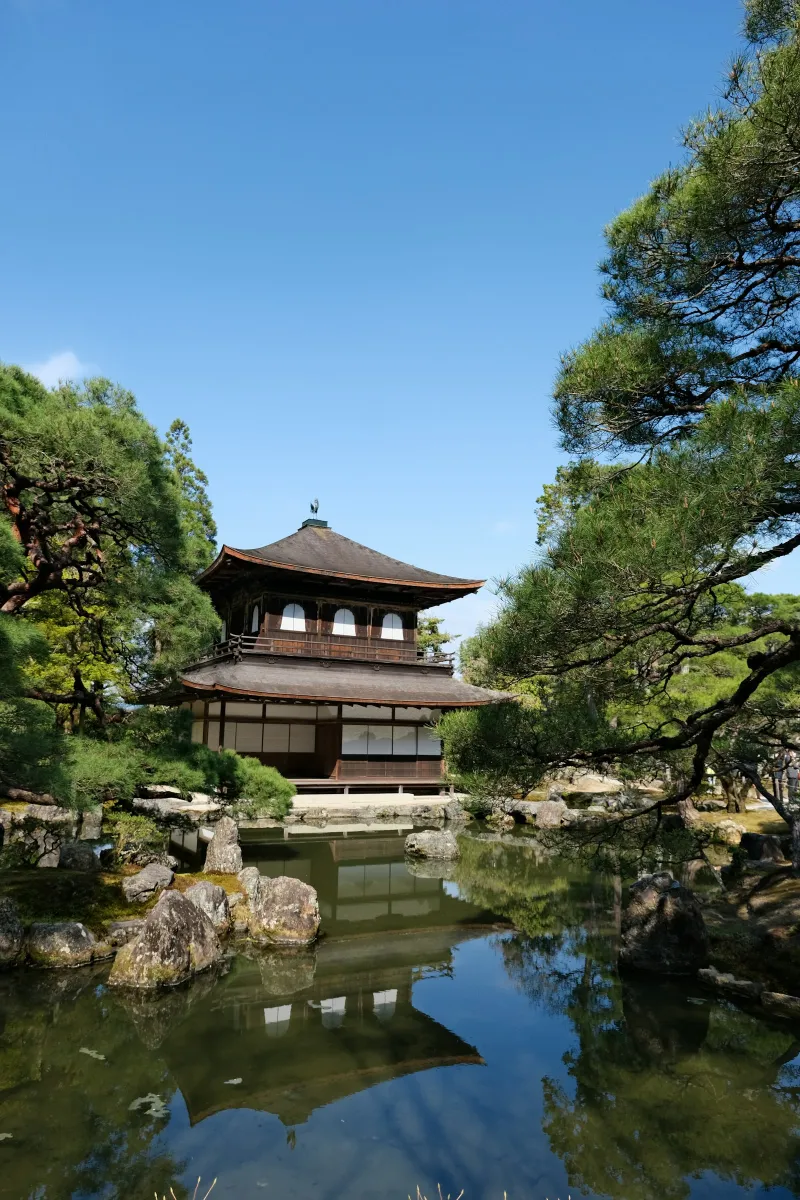
Table of contents
- Ginkakuji and the Philosopher’s Path at a glance
- Ginkakuji entrance fee and opening hours
- How to get to Ginkakuji from Kyoto Station (and Osaka, Tokyo)
- Ginkakuji Temple (Silver Pavilion): what to see in 30 minutes
- Ginkakuji autumn special opening 2026
- Philosopher’s Path Kyoto: route, map and how long it takes
- Philosopher’s Path in October and November: when are the autumn leaves best?
- Philosopher’s Path to Nanzen-ji and Eikando (night light-up 2026)
- Ginkakuji vs Kinkakuji: which is better, and is Ginkakuji worth seeing?
- Philosopher’s Path cafes and restaurants (Kojiro approves!)
- Ginkakuji and Philosopher’s Path half-day itinerary
- Philosopher’s Path by e-bike: guided tour and what travelers say
- Where to stay for Ginkakuji and the Philosopher’s Path
- Ginkakuji and Philosopher’s Path FAQ
- More Kyoto guides
Quick picks
- Short on time or a first-timer in Kyoto: a small-group e-bike tour with an English-speaking guide covers Ginkakuji, Nanzen-ji, Chion-in and Kiyomizu-dera in half a day, with free cancellation up to 24 hours before (4.9/5 from 9 Klook reviews). Check dates and prices for the Higashiyama e-bike tour on Klook
- Want to wake up next to the walk: a traditional inn by Nanzen-ji at the south end of the path. Check dates and prices for Nanzenji Garden Ryokan Yachiyo on Klook
- Walking it on your own: you don’t need a tour or an advance ticket; Ginkakuji sells tickets at the gate. Just bring mobile data for maps and bus times: get a Japan eSIM from Airalo
Ginkakuji and the Philosopher’s Path at a glance
| Ginkakuji ticket | ¥1,000 adults (high school and older); ¥500 elementary and junior high school students |
| Ginkakuji hours | March 1 to November 30: 8:30 a.m. to 5:00 p.m.; December to February: 9:00 a.m. to 4:30 p.m. Open every day |
| Philosopher’s Path | Free, open-air canal path of about 1.8 km (1.1 miles) between Ginkakuji and the Nanzen-ji area |
| Time needed | About 30 minutes inside Ginkakuji (official estimate) + about 30 minutes for a relaxed walk along the path; 3 to 4 hours if you add Eikando and Nanzen-ji |
| Budget | About ¥1,500 to ¥3,000 per adult with buses and one or two temples (about US$9.50 to $19 at about ¥158 = $1) |
| Best time | 8:30 a.m. opening; early April for cherry blossoms; mid-November to early December for autumn colors (varies each year) |
| Ease of access | Easy: subway + one bus from Kyoto Station (about 45 minutes); the path itself is flat but Ginkakuji’s hillside viewpoint has stone steps |
Secret ninja tip: Beat the crowds: start at Ginkakuji right at 8:30 a.m. and walk south. Most tour groups arrive at Ginkakuji later in the morning.
Ginkakuji entrance fee and opening hours
| Ticket | Price |
|---|---|
| Adults (high school students and older) | ¥1,000 |
| Elementary and junior high school students | ¥500 |
| Groups | No group discount |
| Autumn special opening (Nov 1 to Dec 5, 2026) | +¥2,000 per person on top of the regular ticket |
| Season | Opening hours |
|---|---|
| Summer hours (March 1 to November 30) | 8:30 a.m. to 5:00 p.m. (please leave by 5:20 p.m.) |
| Winter hours (December 1 to end of February) | 9:00 a.m. to 4:30 p.m. (please leave by 4:50 p.m.) |
Ginkakuji is open all year. You don’t need to book Ginkakuji in advance or take a tour to enjoy it: tickets are sold at the gate. The temple takes cash and several cashless payment options through its “Omairi Pay” system (not for the special opening or goshuin stamps), but carry some yen in case your card is not accepted. Hours and prices can change during special exhibitions, so check the official site the week before you go.
Good to know: there is no Wi-Fi on the grounds, there are no regular guides (only for special openings), and pets must stay in a carrier or in your arms. Wheelchairs can follow most of the route, but the hillside viewpoint and a few spots up the stairs are not accessible; an accessible toilet is next to the gift shop.
How to get to Ginkakuji from Kyoto Station (and Osaka, Tokyo)
Ginkakuji is in northeastern Kyoto, away from the train lines, so the last part is always a bus or a walk. The nearest bus stop is Ginkakuji-michi; from there, walk east along the canal, past the north end of the Philosopher’s Path, and up the lane of souvenir shops to the gate (about 10 minutes).
| From | Best route | Time | Cost (adult) |
|---|---|---|---|
| Kyoto Station (recommended) | Karasuma subway line to Imadegawa (about 9 min), then City Bus 203 from the Karasuma-Imadegawa stop to Ginkakuji-michi | About 45 min | Subway fare + ¥230 bus |
| Kyoto Station (weekends and holidays) | Express sightseeing bus EX100 or City Bus 105 to Ginkakuji-mae | Depends on traffic | EX100 ¥500; 105 ¥230 |
| Kinkaku-ji | City Bus 102 or 204 from Kinkakuji-michi to Ginkakuji-michi | Depends on traffic | ¥230 |
| Gion / Kawaramachi | Keihan line to the last stop, Demachiyanagi, then City Bus 7 or 203 to Ginkakuji-michi | About 30 min | Train fare + ¥230 bus |
| South end of the path (Keage) | Tozai subway line to Keage, then walk about 15 minutes to the path near Nanzen-ji | About 15 min walk | Subway fare |
| Osaka | Keihan line from Yodoyabashi or Kyobashi to Demachiyanagi, then City Bus 7 or 203 | About 1.5 hours | Train fare + ¥230 bus |
| Tokyo | Tokaido Shinkansen to Kyoto Station (about 2 hours 15 minutes on the fastest trains), then the Kyoto Station route above | About 3 hours | Shinkansen fare + local fares |
Kyoto City buses cost a flat ¥230 for adults inside the city, and you can pay with an IC card such as ICOCA, Suica or PASMO. Credit cards and the Japan Rail Pass are not accepted on city buses. If you will ride several buses and subways in one day, the Subway & Bus 1-Day Pass (¥1,100 adults) covers all city buses and subway lines.
Secret ninja tip: Kyoto’s tourism office advises against taking a direct bus all the way from Kyoto Station, because the buses crawl through downtown traffic. Ride the subway north first and only take the bus for the last stretch.
Coming from Tokyo? A Japan Rail Pass covers the Shinkansen to Kyoto on Hikari trains, but check whether it pays off for your whole route before you buy.
Ginkakuji Temple (Silver Pavilion): what to see in 30 minutes
The official name of Ginkakuji is Jisho-ji. It began as the Higashiyama-den, the retirement villa of Ashikaga Yoshimasa, the eighth shogun of the Muromachi period, who spent his life chasing refined, simple beauty. After he died, the villa became a Zen temple of the Rinzai school. The nickname “Silver Pavilion” was given in the Edo period to contrast it with Kinkaku-ji, the Golden Pavilion. It is part of the “Historic Monuments of Ancient Kyoto” UNESCO World Heritage Site.
Is the Silver Pavilion actually silver?
No. The two-story pavilion (the Kannon-den) is plain dark wood, and that understated look is the point: it is the opposite of the gold leaf at Kinkaku-ji. The pavilion is a National Treasure, but you see it from the garden only; it is not open inside.
Follow the one-way route in this order:
- Ginkakuji-gaki (the hedge corridor): a 50-meter walk between tall hedges and bamboo fences from the main gate to the inner gate, meant to leave the outside world behind.
- Ginshadan and Kogetsudai: a flat “sea” of raked white sand and a tall, cut-off cone of sand in front of the main hall. People often say they were made to reflect moonlight; the temple itself notes there is little evidence for that story, but the shapes are unlike anything else in Kyoto.
- The Silver Pavilion (Kannon-den) and its pond: the classic photo is from across the pond with the sand cone on the left.
- Togudo: a National Treasure hall built at the same time as the pavilion. Inside is Dojinsai, the oldest surviving four-and-a-half-mat study room in Japan (open only during special openings).
- The moss garden and hillside viewpoint: stone steps lead up the hill to a lookout over the pavilion with Kyoto city behind it. This is the best view at Ginkakuji, so do not skip it if you can manage the stairs.
Ginkakuji autumn special opening 2026
From November 1 to December 5, 2026, Ginkakuji opens three buildings that are normally closed: the main hall (Hondo) with sliding-door paintings by Yosa Buson and Ike no Taiga (reproductions), the National Treasure Togudo with Dojinsai, and the Roseitei incense room. Before you plan around it, know these rules from the temple:
- Visits are guided tours only, in Japanese only. Interpreting, including translation apps, is not allowed during the tour.
- Tours start at 10:00, 11:00, 12:00, 13:30, 14:30 and 15:30, take about 30 minutes, and take about 20 people each. The 10:00, 11:00 and 12:00 tours on November 15 are cancelled.
- There is no advance booking: write your name on the sign-up sheet in front of the main hall (it is put out about an hour before each tour) and gather 10 minutes before the start. Groups of 7 or more are not accepted.
- It costs ¥2,000 per person (with a small paper-cut souvenir) on top of the regular ¥1,000 ticket. Children younger than elementary school age cannot join.
- Bags, phones and tablets are kept at reception; photos, recordings, notes and sketches are not allowed. Wear socks (no bare feet).
For most English-speaking visitors, the regular garden visit is enough. If you speak some Japanese or love Japanese architecture, the chance to see Dojinsai is special.
Philosopher’s Path Kyoto: route, map and how long it takes
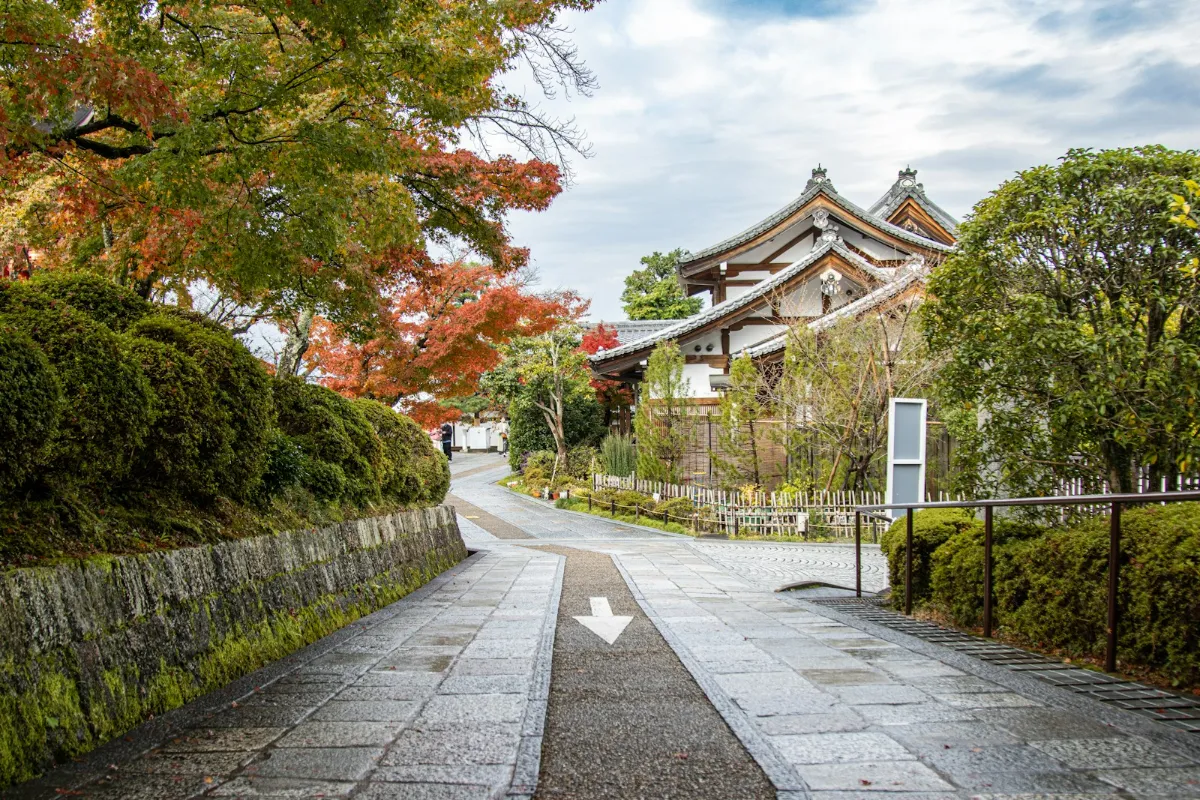
The Philosopher’s Path (Tetsugaku-no-michi) is a stone path along a narrow canal lined with cherry trees, running about 1.8 km from the Ginkakuji end in the north to Wakaoji Bridge near Eikando and Nanzen-ji in the south. It is named after the philosopher Nishida Kitaro (1870 to 1945), who liked to walk here. At a relaxed pace the walk takes about 30 minutes; plan 1 to 1.5 hours if you stop at small temples and cafes along the way.

Map: Open the walking route from Ginkakuji to Nanzen-ji in Google Maps.
| Stop (north to south) | What it is | Cost |
|---|---|---|
| Ginkakuji | Silver Pavilion, sand garden and hillside view | ¥1,000 |
| Honen-in (short detour east) | Small, mossy temple with a thatched gate and two sand mounds | Grounds free to walk in |
| Wakaoji Bridge | South end of the canal path | Free |
| Eikando | One of Kyoto’s most famous autumn-leaf temples | ¥1,000 normally; ¥1,500 during the autumn exhibition |
| Nanzen-ji | Huge Zen temple with a brick aqueduct (Suirokaku) in its grounds | Grounds free; Hojo garden ¥600, Sanmon gate ¥600 |
Philosopher’s Path etiquette: the path is narrow and people live along it. Keep to one side, do not block the path for photos, keep your voice down near homes, and take your rubbish with you, because there are few bins.
Philosopher’s Path in October and November: when are the autumn leaves best?
| Month | What you will see | Crowds |
|---|---|---|
| Early April | Cherry blossoms over the canal, then petals floating on the water | Very busy |
| June | Green trees; the temple notes the path is known for fireflies in summer | Quiet |
| October | Mostly green, with the first hints of color late in the month; comfortable walking weather | Moderate |
| Mid-November to early December | Red and orange maples, best around Eikando and Nanzen-ji; peak timing changes every year | Very busy, especially weekends |
| December to February | Bare trees and a quiet, wintry mood; Ginkakuji switches to winter hours on December 1 | Quiet |
In Kyoto, autumn color usually peaks from mid-November into early December, and the trees around Eikando and Nanzen-ji are among the most famous. Update, November 1, 2026: the maples at Eikando, at the south end of the walk, were still green, and forecasters expect the peak there from late November into early December (tenki.jp says late November to early December; Weathernews expects it from around November 23). If you visit in early November, enjoy the quiet path and save Eikando for later in the month if you can. Pack layers: mornings in late autumn are chilly and the temples are cold when you take your shoes off. For the peak forecast and all of Kyoto’s light-ups, see our Kyoto autumn leaves 2026 guide.
Secret ninja tip: On autumn weekends, walk the path before 10 a.m. or after about 3 p.m. Midday is when the tour groups and day-trippers overlap.
Philosopher’s Path to Nanzen-ji and Eikando (night light-up 2026)
At the south end of the canal path, keep walking about 10 minutes to two big temples that make the walk worth finishing:
Eikando (Zenrin-ji): autumn exhibition and night illumination 2026
| Dates (2026) | Hours | Adult ticket | |
|---|---|---|---|
| Autumn exhibition (daytime) | November 11 to December 6 | Reception 9:00 a.m. to 4:00 p.m. (gates close at 5:00 p.m.) | ¥1,500 |
| Night illumination | November 20 to December 6 | 5:30 p.m. to 8:30 p.m. (gates close at 9:00 p.m.) | ¥1,000 (junior high and older) |
| Regular visits (outside the exhibition) | All year | 9:00 a.m. to 4:00 p.m. (gates close at 5:00 p.m.) | ¥1,000 |
Night tickets cannot be bought in advance, and daytime visitors have to leave by 5:00 p.m., so you cannot stay on from the day visit into the light-up. Expect lines on weekends at peak color.
Nanzen-ji: free grounds and the brick aqueduct
Nanzen-ji’s grounds are free to walk in. Inside them is Suirokaku, a red-brick aqueduct from the Meiji era that still carries water from Lake Biwa: its arches are one of Kyoto’s favorite photo spots. The Hojo (abbot’s quarters) rock garden and the climb up the Sanmon gate cost ¥600 each for adults, from 8:40 a.m. to 5:00 p.m. (4:30 p.m. December to February; last entry 20 minutes before closing; closed to general visitors December 28 to 31). From Nanzen-ji, Keage Station on the Tozai subway line is a short walk away.
Philosopher’s Path to Kiyomizu-dera and Gion
Want to keep going? From Nanzen-ji you can walk south through the Okazaki area, past Chion-in and Maruyama Park to Gion and on to Kiyomizu-dera in about an hour, or take a taxi. See our Gion guide and Kiyomizu-dera guide for that side of the city.
Ginkakuji vs Kinkakuji: which is better, and is Ginkakuji worth seeing?
| Ginkakuji (Silver Pavilion) | Kinkaku-ji (Golden Pavilion) | |
|---|---|---|
| Look | Dark wood, moss, sculpted sand, quiet | Covered in gold leaf, reflected in a big pond |
| Best for | Gardens, calm, a longer walk | One spectacular photo |
| Pairs well with | Philosopher’s Path, Eikando, Nanzen-ji | Ryoan-ji, Arashiyama |
| Location | Northeast Kyoto | Northwest Kyoto (connected by City Bus 102 or 204) |
They are opposites by design, which is why many visitors see both. If you have only one morning, Kinkaku-ji gives the “wow” photo, while Ginkakuji gives the better hour: the gardens, the hillside view and the walk that follows. Is Ginkakuji worth seeing? Yes, if you enjoy gardens and quiet spaces and you combine it with the Philosopher’s Path. If you only want the famous shot, read our Kinkaku-ji guide first.
Philosopher’s Path cafes and restaurants (Kojiro approves!)
Small cafes and sweet shops are scattered along the canal, and the lane up to Ginkakuji has snack stands. Two well-known names:
- Omen (Ginkakuji main shop): a popular udon restaurant near the north end of the path, known for thick noodles dipped in a warm broth with a plate of seasonal vegetables. Kojiro approves! Expect a wait at lunchtime.
- Yojiya Cafe (Ginkakuji shop): a cafe in a traditional house with a garden, known for matcha drinks and desserts. Hayate claims he only came “for the garden.” He finished his matcha dessert in four seconds.
Check opening days before you go, as small shops along the path close on different weekdays.
Ginkakuji and Philosopher’s Path half-day itinerary
| Time | Plan |
|---|---|
| 8:00 a.m. | Subway from Kyoto Station to Imadegawa, then bus 203 to Ginkakuji-michi |
| 8:30 a.m. | Ginkakuji at opening: hedge corridor, sand garden, pavilion, hillside viewpoint (about 45 min with photos) |
| 9:30 a.m. | Walk south along the Philosopher’s Path; short detour to Honen-in |
| 10:30 a.m. | Eikando (in autumn, the leaves; outside the exhibition, a quieter visit) |
| 11:30 a.m. | Nanzen-ji: Suirokaku aqueduct, Hojo garden or Sanmon gate |
| 12:30 p.m. | Lunch, then Keage Station for the subway, or walk on toward Gion |
Prefer afternoons? Reverse it: start at Keage Station around 1 p.m., walk north, and end at Ginkakuji before 4:30 p.m. (last entry is 5:00 p.m. until November 30). In late November, you could finish the day at the Eikando night illumination instead.
Philosopher’s Path by e-bike: guided tour and what travelers say
Short on time? A small-group e-bike tour covers the eastern hills much faster than walking, with stops at four temples.
| Tour | Kyoto Higashiyama Half-Day E-Bike Tour with UNESCO Sites (Klook) |
| Best for | First-timers and families with teens who want the eastern hills in half a day with a guide |
| Not for | People who are not comfortable cycling in city traffic or up some hills |
| Duration | Half day |
| Price | About US$88 per person when we checked; changes by date |
| Included | English-speaking guide, e-bike and gear, admission to Ginkakuji, Nanzen-ji, Chion-in and Kiyomizu-dera |
| Group size | Small group of 1 to 4 |
| Cancellation | Free cancellation up to 24 hours before |
| Rating | 4.9 out of 5 from 9 reviews on Klook (checked October 2026) |
| Our verdict | Worth it if you have only one day for eastern Kyoto; skip it if you prefer to walk the path slowly on your own |
Check dates and prices for the Higashiyama e-bike tour on Klook
What travelers say
The tour has a 4.9 out of 5 rating from 9 reviews on Klook (checked October 2026). Reviewers most often mention:
- Friendly, knowledgeable guides who adjust the route to the group’s interests and stop for photos.
- Small group size and quieter back streets, with some sights reached before the 9 a.m. crowds.
- Comfortable e-bikes and feeling safe, including families with teenagers; one reviewer notes it suits people comfortable riding in city traffic and up some hills.
- One reviewer found the meeting point (on the sidewalk near a hotel, not inside it) a little hard to find, so check the meeting instructions the day before.
Where to stay for Ginkakuji and the Philosopher’s Path
The area around Ginkakuji is mostly residential, with few hotels. For most visitors it is easier to stay near a subway line and ride in: around Kyoto Station (best for day trips and the Shinkansen), Karasuma-Oike or Shijo (central, on both subway lines), or near Sanjo / Higashiyama on the Tozai line (one stop or two from Keage, the south end of the walk). Our Where to stay in Kyoto guide compares the areas.
Book in advance: In the second half of November, Kyoto hotels fill up and prices rise, so book your room as early as you can. To sleep right next to the walk, Nanzenji Garden Ryokan Yachiyo is a traditional inn by Nanzen-ji at the south end of the path (linked in the quick picks above). For other areas, compare Kyoto hotels and prices on Klook.
Ginkakuji and Philosopher’s Path FAQ
What is the Ginkakuji entrance fee?
¥1,000 for adults (high school students and older) and ¥500 for elementary and junior high school students. There is no group discount.
What are Ginkakuji’s opening hours?
8:30 a.m. to 5:00 p.m. from March 1 to November 30, and 9:00 a.m. to 4:30 p.m. from December to February. It is open every day.
How long does the Philosopher’s Path take?
About 30 minutes at a relaxed pace for the 1.8 km path itself. With Ginkakuji, a few small temples and a cafe stop, allow 2 to 3 hours; with Eikando and Nanzen-ji, 3 to 4 hours.
How do I get to Ginkakuji from Kyoto Station?
Take the Karasuma subway line to Imadegawa, then City Bus 203 to Ginkakuji-michi and walk about 10 minutes. It takes about 45 minutes in total.
Is Ginkakuji worth visiting if I have seen Kinkaku-ji?
Yes. They are very different: Ginkakuji is about the gardens, the sand sculptures and the view from the hill, and it starts the Philosopher’s Path walk.
Is the Philosopher’s Path worth visiting in October?
Yes for a calm walk: the trees are mostly green in October and the weather is pleasant. For red leaves, come from mid-November to early December.
When are the autumn leaves best at Ginkakuji and the Philosopher’s Path in 2026?
On November 1, 2026 the maples at nearby Eikando were still green. Forecasts put the peak around late November into early December (from around November 23 at Eikando, according to Weathernews), but timing changes with the weather, so check a forecast the week before you go.
Is the Philosopher’s Path lit up at night?
The canal path is not an illumination event, and it is dark and quiet in the evening. For autumn night lights nearby, visit the Eikando night illumination (November 20 to December 6, 2026).
Is Ginkakuji really silver?
No. The name was given in the Edo period to contrast it with the Golden Pavilion; the building has never been covered in silver.
Trip prep checklist
- Japan eSIM (Airalo) for maps and bus times, plus an IC card (ICOCA or Suica) for the bus
- Comfortable shoes: the path is flat, but Ginkakuji’s hillside viewpoint has steps
- Clean socks, since some temples ask you to take your shoes off
- A little cash for small temples and shops, and a bag for your rubbish
- Learn three phrases: “Sumimasen” (excuse me), “Arigatou gozaimasu” (thank you), “Ginkakuji wa dochira desu ka?” (which way is Ginkakuji?)
- Everything we recommend in one place: Japan Travel Kit
More Kyoto guides
- Kinkaku-ji guide: the Golden Pavilion
- Kiyomizu-dera guide: tickets, night illumination and the walk to Gion
- Gion guide
- Nishiki Market guide
- Arashiyama guide: Bamboo Grove tips, Sagano train and a one-day itinerary
- Fushimi Inari guide: 10,000 torii gates and kitsune udon
- Nijo Castle guide: tickets, nightingale floors and night illumination
- Where to stay in Kyoto: the best areas and hotels
- Kyoto itinerary for 2 or 3 days: a day-by-day plan with a map
A tip from our writer: I grew up in Takayama, the mountain town often called “Little Kyoto.” It even has its own Higashiyama (“eastern hills”) temple district with a quiet walking course past old temples and shrines, much like a small, crowd-free Philosopher’s Path. If you are heading to the Japanese Alps, see Where to Stay in Takayama: A Local’s Area Guide.
Official sites: Ginkaku-ji (official, Shokoku-ji), Eikando, Nanzen-ji, Kyoto City Official Travel Guide.
Last checked on official sites: November 2026. Hours, prices, fares and local rules can change, so check before you go.
This post contains affiliate links. If you book through them, we may earn a small commission at no extra cost to you.
Kojiro and Hayate are AI-generated characters; all character images are AI-generated illustrations.
Sources: Ginkaku-ji: access, hours and admission · Ginkaku-ji: admission and payment methods incl. Omairi Pay (Japanese) · Ginkaku-ji FAQ · Ginkaku-ji history · Ginkaku-ji grounds guide · Ginkaku-ji autumn special opening 2026 (Japanese) · Eikando: admission and autumn 2026 · Nanzen-ji: hours and admission (Japanese) · Kyoto City Official Travel Guide: access to Ginkaku-ji and the Philosopher’s Path · Kyoto City Official Travel Guide: Philosopher’s Path (Japanese) · Kyoto City Bus: fares · Discover Kyoto: Honen-in · Klook activity page and reviews (linked above) · Eikando autumn leaves forecast (tenki.jp, Japanese) · Eikando autumn leaves forecast (Weathernews, Japanese)