Kojiro unfolded a paper map of Kyoto and put a paw on every temple he could see. “We can do all of them today, right?” Hayate quietly folded the map in half. “Three days. One side of the city each day. And we start early.”
That is the whole secret to Kyoto. The famous sights are spread around the edges of the city, buses are slow, and the big names get crowded by about 10 a.m. This first-timer’s itinerary groups the sights by area, so you spend your time at temples instead of in traffic. It works as a 3-day Kyoto itinerary, and the section on 2 days shows exactly what to cut. Every stop links to our full guide with tickets, hours and tips, and there is a map so you can see how the days fit together.

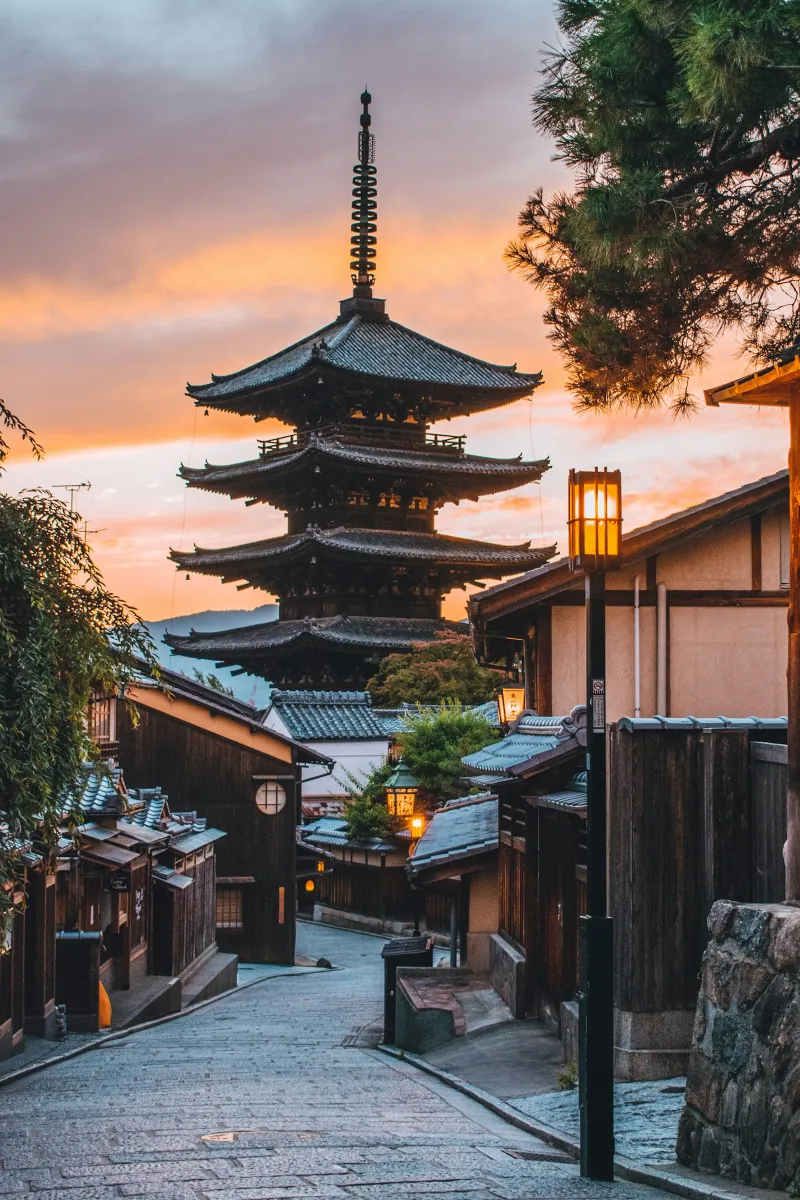
Table of contents
- Is 2 or 3 days in Kyoto enough?
- Kyoto itinerary map: where each day goes
- Kyoto itinerary day 1: Fushimi Inari, Kiyomizu-dera and Gion
- Kyoto itinerary day 2: Arashiyama, Kinkaku-ji and Nishiki Market
- Kyoto itinerary day 3: Nijo Castle, Nanzen-ji and the Philosopher’s Path
- Only 2 days in Kyoto? What to cut
- Getting around Kyoto: bus and subway pass, IC cards and taxis
- Kyoto itinerary with kids or on a rainy day
- Kyoto day tours: when a tour makes sense
- Where to stay for this Kyoto itinerary
- Kyoto itinerary FAQ
- More Kyoto guides
Quick picks
- Doing it on your own (recommended): you don’t need a tour for any stop in this plan. Every temple sells tickets at the gate, and a ¥1,100 subway and bus 1-day pass covers most of the city routes.
- Only one day, or coming from Osaka: a guided day tour gets you to Kinkaku-ji, Kiyomizu-dera, Gion and Fushimi Inari without planning buses. Check dates and prices for the Kyoto Classic Day Tour on Klook
- A third day with deer: swap day 3 for Nara. A guided Kyoto and Nara day tour covers Kiyomizu-dera, Fushimi Inari and Nara Park. Check dates and prices for the Kyoto and Nara Day Tour on Klook
Is 2 or 3 days in Kyoto enough?
| Ideal length | 3 days to see east, west and central Kyoto without rushing; 2 days for the highlights |
| Budget | About ¥4,000 to ¥7,000 per adult per day for temple tickets, local transport and snacks (about US$27 to $47 at ¥150 = $1), not counting hotels and dinners (our estimate) |
| Getting around | Trains and the subway for long hops, buses and walking for the rest. The subway and bus 1-day pass is ¥1,100 |
| Best seasons | Late March to early April (cherry blossoms) and mid-November to early December (autumn leaves); both are the busiest times |
| Start time | 7:00 to 8:00 a.m. every day. Early mornings are the single biggest upgrade to a Kyoto trip |
| Pace | Moderate: 15,000 to 25,000 steps a day, with stairs at Fushimi Inari and Kiyomizu-dera |
Is 2 days in Kyoto enough? For a first visit, 2 days covers the most famous places if you start early and accept some crowds. Is 3 days in Kyoto enough? Yes, for most first-timers. Three days lets you see the big three areas (east, west and central) at a comfortable pace, with time for one slow experience like a tea ceremony or a market food walk. With 4 or 5 days, add a day trip to Nara and a free day in a quieter area.
Local’s tip: I grew up in Takayama, a small town in the mountains of Gifu, and Japanese travelers there do exactly what works in Kyoto: they see the famous spots first thing in the morning and spend the middle of the day in shops and cafes. Kyoto is the same, only bigger. Plan your must-see temple for opening time each day.
Kyoto itinerary map: where each day goes
Kyoto’s sights sit in clusters. Day 1 is east Kyoto (Higashiyama), day 2 is west Kyoto (Arashiyama and Kinkaku-ji) plus downtown, and day 3 links Nijo Castle in the center with the temples of northeast Kyoto. The map below is simplified, so use the route links under each day to open the real directions in Google Maps.
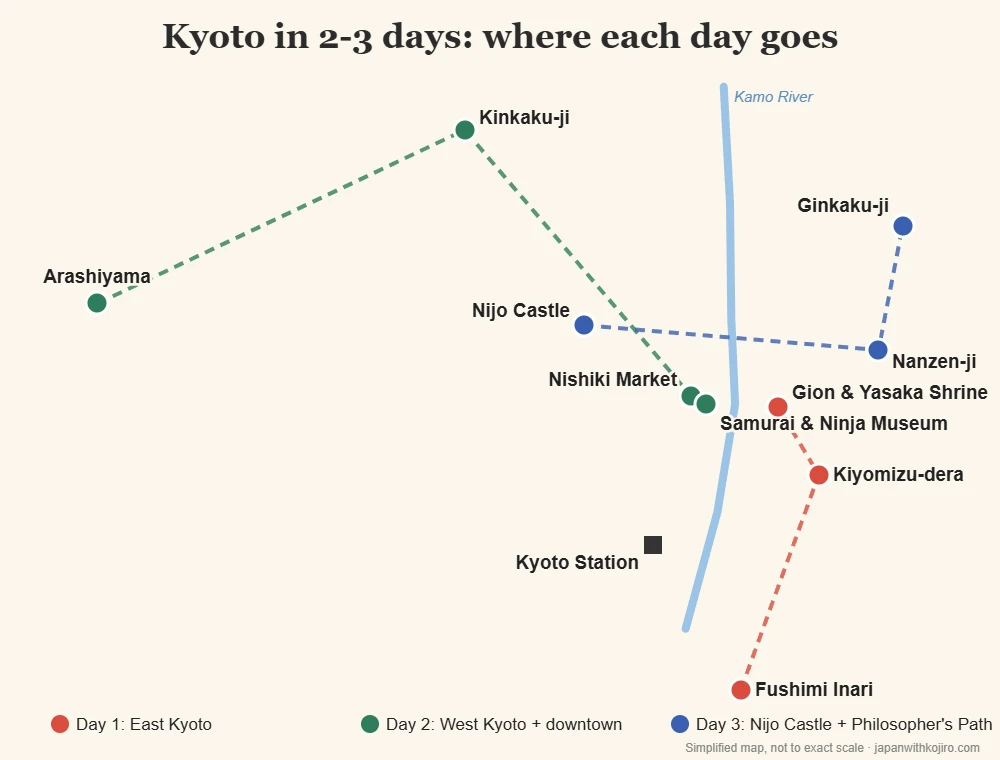
- Day 1 route: Fushimi Inari to Kiyomizu-dera to Gion
- Day 2 route: Arashiyama to Kinkaku-ji to Nishiki Market
- Day 3 route: Nijo Castle to Nanzen-ji to Ginkaku-ji
Get mobile data before you land so the map and live bus times work from day one: Airalo Japan eSIM.
Kyoto itinerary day 1: Fushimi Inari, Kiyomizu-dera and Gion
East Kyoto is the Kyoto of postcards: red torii gates, a wooden temple stage over the trees, and stone lanes that lead down into the geisha district. It is also the busiest part of the city, so this day starts early.
| Time | Stop |
|---|---|
| 7:00 a.m. | Fushimi Inari: JR Nara Line from Kyoto Station to Inari Station (about 5 minutes, ¥150). The shrine is free and open 24 hours. Walk the Senbon Torii tunnels before the tour groups arrive, and climb at least to the Yotsutsuji viewpoint if your legs allow |
| 9:30 a.m. | Keihan Line from Fushimi-Inari to Kiyomizu-Gojo, then walk about 25 minutes uphill (about 35 minutes in total) |
| 10:15 a.m. | Kiyomizu-dera: ¥500. The wooden stage, the view back from Okunoin and the Otowa Waterfall. Allow 1 to 1.5 hours |
| 12:00 p.m. | Lunch and snacks on Sannenzaka and Ninenzaka, then the Yasaka Pagoda photo spot. Many shops ask you to eat at the shop rather than while walking |
| 2:00 p.m. | Walk Nene-no-michi and Maruyama Park to Yasaka Shrine. Optional: Kennin-ji temple (¥800) for its quiet gardens and the twin-dragon ceiling |
| 5:00 p.m. | Gion at dusk: Hanamikoji and the Shirakawa canal when the lanterns come on (about 5:00 to 7:00 p.m.), then dinner in Pontocho across the river |
Hayate’s ninja secret: if you want the Kiyomizu-dera stage almost to yourself, flip the morning. The temple opens at 6:00 a.m., hours before most of Kyoto, and Fushimi Inari is open all night, so you can do Kiyomizu-dera at 6:00 and the torii gates right after.
Gion rules: Gion is a neighborhood where people live and work. Do not chase or photograph geiko and maiko, and stay off the private lanes marked with signs. Our Gion guide explains the rules and the fines.
Optional stop: near Yasaka Pagoda, a chopstick-making workshop is a well-reviewed small experience in Kyoto (details in our Gion guide). In late November, add the Kiyomizu-dera night illumination.
Kyoto itinerary day 2: Arashiyama, Kinkaku-ji and Nishiki Market
Day 2 starts in the bamboo forest of Arashiyama on the western edge of the city, swings north to the Golden Pavilion, and ends downtown with street food.

| Time | Stop |
|---|---|
| 7:30 a.m. | Arashiyama: JR Sagano Line from Kyoto Station to Saga-Arashiyama (about 15 minutes, about ¥240), then walk 10 to 15 minutes. The Bamboo Grove is free and best before 8:00 a.m. |
| 8:30 a.m. | Tenryu-ji garden (¥500) when it opens, then the Togetsukyo Bridge and the river |
| 10:30 a.m. | Randen tram from Arashiyama, changing at Katabiranotsuji, to Kitano-Hakubaicho (about 30 minutes), then a short bus or taxi ride to Kinkaku-ji. Allow about 45 to 60 minutes door to door |
| 11:30 a.m. | Kinkaku-ji: ¥500, open 9:00 a.m. to 5:00 p.m. The garden loop takes about 45 minutes to 1 hour. There are no lockers, so travel light |
| 1:30 p.m. | City bus toward downtown Shijo (allow about 40 minutes, longer in autumn traffic), or the subway from Kitaoji |
| 2:30 p.m. | Nishiki Market: a late lunch of small bites. Most shops open about 10:00 a.m. to 6:00 p.m., and many close on Wednesdays |
| 4:00 p.m. | Samurai & Ninja Museum: about 4 minutes on foot from Nishiki Market. A 30-minute English-guided tour plus armor try-on and ninja-star throwing, about an hour in total |
Prefer a slower day? Skip Kinkaku-ji and stay in Arashiyama: take the Sagano Romantic Train (¥880 one way) or the Hozugawa river boat, both explained in our Arashiyama guide. In autumn, book the train ahead.
Kojiro approves! Nishiki Market is the place to graze: grilled seafood, tamagoyaki and soy milk doughnuts, a few bites at a time. Many shops start closing around 5:00 to 6:00 p.m., so don’t leave it too late.
Kyoto itinerary day 3: Nijo Castle, Nanzen-ji and the Philosopher’s Path
Day 3 is the calmest day: a shogun’s palace in the morning, then a canal walk between two of Kyoto’s loveliest temples.
| Time | Stop |
|---|---|
| 8:45 a.m. | Nijo Castle: the subway stop Nijojo-mae is next to the entrance (about 15 minutes from Kyoto Station). ¥1,300 with the Ninomaru Palace and its “singing” nightingale floors. Allow 1 to 1.5 hours |
| 10:30 a.m. | Tozai subway line from Nijojo-mae straight to Keage (no change), then walk about 15 minutes to Nanzen-ji. The grounds and the brick aqueduct are free |
| 11:30 a.m. | Walk north on the Philosopher’s Path, a flat canal path of about 1.8 km. Stop for lunch at one of the cafes along the way |
| 1:30 p.m. | Ginkaku-ji (Silver Pavilion): ¥1,000. The moss garden and the hillside viewpoint take about 30 minutes to 1 hour |
| 3:00 p.m. | City bus back to downtown or Kyoto Station for shopping, or rest at the hotel before dinner |
Autumn add-on: from late November, Eikando near Nanzen-ji holds a famous night illumination. Dates and prices for this and other light-ups are in our Kyoto autumn leaves 2026 guide.
Want Nara instead? Day 3 is the easiest day to swap for a day trip to Nara, about 45 minutes away by train, where you can see the deer park and the giant Buddha of Todai-ji.
Only 2 days in Kyoto? What to cut
With 2 days, keep days 1 and 2 almost as they are, and fit the best parts of day 3 around them:
- Day 1: Fushimi Inari, Kiyomizu-dera and Gion as above. Skip Kennin-ji if you are tired
- Day 2: Arashiyama at 7:30 a.m., Kinkaku-ji before lunch, then Nijo Castle (last entry 4:00 p.m.) or Nishiki Market, not both
- Cut: the Philosopher’s Path and Ginkaku-ji. They are lovely, but they are the furthest from everything else
- Coming from Osaka for one day? Pick one area only (day 1 is the classic choice), or join a guided day tour so you don’t spend the day on buses
Getting around Kyoto: bus and subway pass, IC cards and taxis
| Subway and bus 1-day pass | ¥1,100 for adults, ¥550 for children. Unlimited Kyoto subway and city bus rides for the day you first use it (some Kyoto Bus, Keihan Bus and JR bus routes are included; late-night buses cost extra). Sold at subway stations, on buses, at some convenience stores and hotels |
| City bus fare | Flat ¥230 for adults inside the city. Kyoto plans a higher bus fare for visitors, but as of October 2026 it has not started |
| IC cards | Suica, PASMO and ICOCA work on trains, the subway and buses. A contactless credit card also works on many routes |
| JR and private trains | The 1-day pass does not cover JR, Keihan, Hankyu or the Randen tram. Pay those with an IC card |
| Taxis | Worth it for short hops with luggage or at the end of a long day. Kinkaku-ji to Kyoto Station is roughly ¥3,000 to ¥4,000 |
Is the pass worth it? It pays off from about five bus or subway rides in a day. On day 3 of this plan (subway, subway, bus, bus) it is about even; on days 1 and 2 you mostly ride JR and private trains, so pay as you go with an IC card. You don’t need a Japan Rail Pass for Kyoto itself: it only makes sense if Kyoto is part of a longer trip from Tokyo. If it is, compare the Japan Rail Pass with single shinkansen tickets before you buy.
Kyoto itinerary with kids or on a rainy day
The itinerary works with kids if you cut one stop a day and plan a midday break. Kids usually love the torii gates, the bamboo forest, the Nishiki snacks and the ninja-star throwing at the Samurai & Ninja Museum. On a rainy day, these indoor picks near Kyoto Station are easy wins:
- teamLab Biovortex Kyoto: 7 minutes on foot from the Hachijo East exit of Kyoto Station, open until 9:00 p.m. (last entry 7:30 p.m.), closed November 17, November 19 and December 15, 2026. Most reviewers spend 2 to 3 hours. Tickets are for a set time and can sell out, so book ahead: check dates and prices for teamLab Biovortex Kyoto on Klook
- Kyoto Aquarium: about 15 minutes on foot from Kyoto Station; tickets are sold at the gate. Details in our where to stay in Kyoto guide (“with kids” section)
- Nishiki Market and the covered shopping arcades next to it stay dry in the rain
Kyoto day tours: when a tour makes sense
You don’t need a tour for anything in this itinerary. A day tour only makes sense if you have one day, are based in Osaka, or simply don’t want to plan buses. These two are popular, well-reviewed options on Klook that match this plan:
Kyoto Classic Day Tour (Kinkaku-ji, Kiyomizu-dera, Gion, Fushimi Inari)
| Best for | First-timers with one day who want the big names without planning |
| Not for | Travelers who like to linger: reviewers say the timing can feel tight |
| Departs from | Osaka or Kyoto (meeting point in front of Kyoto Station, according to reviewers) |
| Guide | Chinese, English and Japanese |
| Price | From about US$52 per person on Klook when we checked; changes by date |
| Rating | 4.7 out of 5 from 975 reviews on Klook, with 10K+ bookings (checked October 2026) |
| Cancellation | Check the terms on the booking page before you book |
| Our verdict | The easiest way to see four big sights in one day |
What travelers say: reviewers praise well-organized days and guides who switch easily between languages. The most common wish is more time at each stop, especially Fushimi Inari.
Check dates and prices for the Kyoto Classic Day Tour on Klook
Kyoto and Nara Day Tour (Kiyomizu-dera, Fushimi Inari, Nara Park)
| Best for | Families and anyone who wants Kyoto and the Nara deer in one easy day |
| Not for | Travelers who want time inside temples: it is a long day with several stops |
| Duration | About 9.5 to 11 hours |
| Departs from | Osaka or Kyoto |
| Price | From about US$52 per person on Klook when we checked; changes by date |
| Rating | 4.7 out of 5 from 3,520 reviews on Klook, with 50K+ bookings (checked October 2026) |
| Cancellation | Check the terms on the booking page before you book |
| Our verdict | A good day-3 swap if you would rather see Nara than northeast Kyoto |
What travelers say: families with young kids and older parents like not having to handle trains, and many say both cities in one day felt manageable. Traffic on weekends and holidays can stretch the schedule, which the tour page itself warns about.
Check dates and prices for the Kyoto and Nara Day Tour on Klook
Where to stay for this Kyoto itinerary
For this plan, stay near Kyoto Station (best for the JR trains to Fushimi Inari and Arashiyama, and for day trips) or downtown Shijo / Karasuma (best for evenings, food and the subway). Gion is the most atmospheric base for early walks. Our where to stay in Kyoto guide has one pick per area with prices and ratings, or you can compare Kyoto hotels on Klook. In late November and early April, book as early as you can.
Kyoto itinerary FAQ
How many days in Kyoto is enough for a first time?
Three days is the sweet spot for most first-timers. Two days covers the highlights if you start early; four or five lets you add Nara and a slower day.
Is 2 days in Kyoto enough?
Yes for the most famous sights: Fushimi Inari, Kiyomizu-dera, Gion, Arashiyama and Kinkaku-ji. You will need early starts and will skip northeast Kyoto.
Should I stay in Kyoto or Osaka?
Stay in Kyoto if you want early mornings at the temples; it saves about an hour of travel each way. Osaka works if you prefer nightlife and are fine with later starts.
Do I need a JR Pass for Kyoto?
No. Inside Kyoto you use local trains, the subway and buses. A JR Pass only helps if Kyoto is part of a longer shinkansen trip.
What is the best order to see Kyoto?
Group by area: east Kyoto on one day, west Kyoto on another, central and northeast on the third, and put your must-see temple at opening time each day.
Can I do this itinerary from Osaka?
Yes, but expect each day to start about an hour later. From Osaka, Arashiyama is easiest on the Hankyu line, and Fushimi Inari and Kiyomizu-dera on the Keihan line.
What should I book in advance?
Hotels in spring and autumn, the Sagano Romantic Train in autumn, and timed tickets like teamLab. Temple tickets are sold at the gate.
More Kyoto guides
- Uji day trip from Kyoto: Byodoin, matcha and a tea ceremony, 20 minutes by JR
- Himeji Castle day trip: trains, the new ticket price and a step-by-step plan
- Kyoto to Nara day trip: the train, the deer, Todai-ji and Kasuga Taisha, on your own or with a tour
- Fushimi Inari guide: the torii gates, the hike and the best time to go
- Kiyomizu-dera guide: tickets, the night illumination and kimono rental
- Gion guide: rules, night walks and tours
- Arashiyama guide: the bamboo grove, the scenic train and the river boat
- Kinkaku-ji guide: tickets, the bus and how to avoid the crowds
- Nishiki Market guide: what to eat and the eating-while-walking rule
- Nijo Castle guide: tickets, nightingale floors and the night illumination
- Ginkakuji and the Philosopher’s Path: the Silver Pavilion and a quiet canal walk
- Samurai & Ninja Museum Kyoto: is it worth it, tickets and what you do
- Kyoto autumn leaves 2026: the best spots, forecast and light-ups
- Where to stay in Kyoto: the best areas and hotels for first-timers
- Kyoto in winter: weather, snow, New Year events and what to wear
- Kurama to Kibune hike: a forest temple, the lantern steps of Kifune Shrine and the Eizan Railway
- Amanohashidate and Ine Funaya day trip: a full day on the Sea of Japan coast for day 4 or later
Last checked on official sites: October 2026. Prices, hours and schedules can change, so check before you go.
This post contains affiliate links. If you book through them, we may earn a small commission at no extra cost to you.
Kojiro and Hayate are AI-generated characters; all character images are AI-generated illustrations.
Sources: Kyoto City Bus & Subway: 1-day pass · teamLab Biovortex Kyoto (official) · Samurai Ninja Museum (Maikoya, official) · Kyoto City Tourism